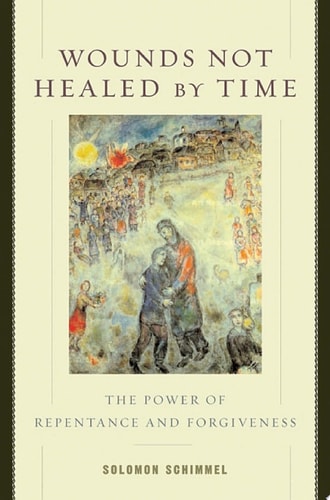
Wounds Not Healed by Time: The Power of Repentance and Forgiveness
0
0
As an Amazon Associate and affiliate partner, Menrva Books earns from qualifying purchases. Learn more
Author Description
How should we respond to injuries done to us and to the hurts that we inflict on others? In this thoughtful book, Wounds Not Healed By Time, Solomon Schimmel guides us through the meanings of justice, forgiveness, repentance, and reconciliation. In doing so, he probes to the core of the human encounter with evil, drawing on religious traditions, psychology, philosophy, and the personal experiences of both perpetrators and of victims. Christianity, Judaism and Islam call for forgiveness and repentance in our relations with others. Yet, as Schimmel points out, there are significant differences between them as to when and whom to forgive. Is forgiving always more moral than refusing to forgive? Is it ever immoral to forgive? When is repentance a pre-condition for forgiveness, and what does repentance entail? Schimmel explores these questions in diverse contexts, ranging from conflicts in a marriage and personal slights we experience every day to enormous crimes such as the Holocaust. He applies insights on forgiveness and repentance to the Middle East, post-apartheid South Africa, inter-religious relationships, and the criminal justice system. In Wounds Not Healed By Time, Schimmel also provides practical strategies to help us forgive and repent, preparing the way for healing and reconciliation between individuals and groups. "It is my belief," Schimmel concludes, "that the best balm for the resentment, rage, guilt, and shame engendered by human evil lies in finding the proper balance between justice, repentance, and forgiveness."
Menrva's Summary
THE THESIS
This book investigates the moral and psychological complexities of repentance and forgiveness, questioning how individuals and societies should navigate the aftermath of interpersonal and historical harm. Solomon Schimmel, a scholar of psychology and religion, synthesizes diverse frameworks from theology, philosophy, and clinical practice to examine the conditions under which forgiveness is appropriate or potentially immoral. He argues that healing requires a delicate balance between seeking justice and fostering genuine reconciliation.
THE SCOPE MAP
What You Will Find
- Comparative analysis of forgiveness in Christianity, Judaism, and Islam
- Psychological examination of resentment, guilt, and shame
- Application of ethical principles to large-scale historical atrocities like the Holocaust
- Practical strategies for personal and interpersonal conflict resolution
Scope Limits
- Does not provide a singular, universal solution for all types of trauma
- Does not focus exclusively on one religious or secular tradition
THE AUTHORITY PERSPECTIVE
Experts and readers frequently note the academic rigor and interdisciplinary approach Schimmel brings to a sensitive subject. The text is recognized as a balanced resource for those seeking to understand the intersection of moral philosophy and human psychology in the context of reconciliation.
Page Count:
277
Publication Date:
2002-01-01
Publisher:
Oxford University Press
ISBN-10:
0190284528
ISBN-13:
9780190284527
Religion
Psychology
Philosophy
Sociology
Repentance
Ethics
Forgiveness
Self Help
Community Tags
Similar Books