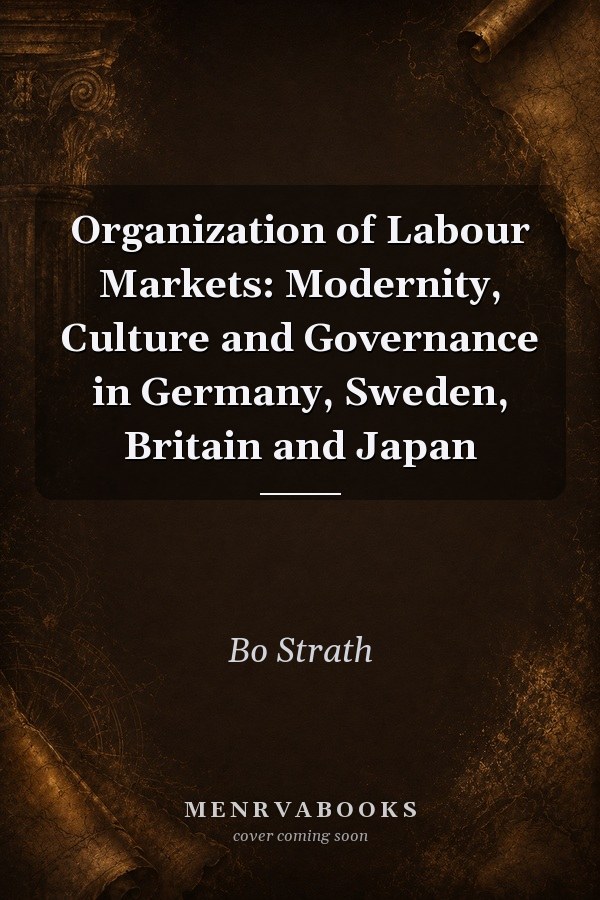
Organization of Labour Markets: Modernity, Culture and Governance in Germany, Sweden, Britain and Japan
0
0
As an Amazon Associate and affiliate partner, Menrva Books earns from qualifying purchases. Learn more
Author Description
There Have Been Dramatic Shifts In The Behaviour Of Labour Markets And The Conduct Of Industrial Relations In The Last Century. This Volume Explores These Changes In The Context Of Four Very Different Societies: Germany, Sweden, Britain And Japan. However, Despite Their Manifest Differences, The Author Demonstrates That For Long Periods Their Labour Markets Were Similar In Many Crucial Respects. The Book Discusses: * The Failure Of Neo-corporatism In Britain In The 1970's And The Subsequent Rise Of Thatcherism; * The Rise Of Japan As A Model For Orderly Industrial Relations In The 1970's * The Collapse Of The German And The Success Of The Swedish Labour Markets In The 1930's.
Menrva's Summary
THE THESIS
This volume investigates the historical evolution and structural governance of labor markets in Germany, Sweden, Britain, and Japan to determine how cultural and political contexts influence industrial relations. Bo Strath, a scholar of modern history and labor relations, utilizes a comparative framework to analyze the shifts in labor market behavior over the last century. By examining the interplay between national policy and economic outcomes, the author argues that despite distinct societal differences, these nations shared significant structural similarities in their labor market development during specific historical periods.
THE SCOPE MAP
What You Will Find
- Comparative analysis of industrial relations in Germany, Sweden, Britain, and Japan.
- Examination of the failure of neo-corporatism in Britain during the 1970s and the rise of Thatcherism.
- Historical review of the collapse of German labor markets versus the success of Swedish models in the 1930s.
- Evaluation of Japan as a global model for orderly industrial relations during the 1970s.
THE AUTHORITY PERSPECTIVE
Experts recognize this work as a significant contribution to the comparative study of political economy and labor history. Readers frequently note the academic density of the prose and the author's meticulous attention to the socio-political factors that shaped modern labor governance.
Page Count:
288
Publication Date:
2003-01-01
Publisher:
Taylor & Francis Group
ISBN-10:
0203209117
ISBN-13:
9780203209110
History
Economics
Sociology
Labor Studies
Industrial Relations