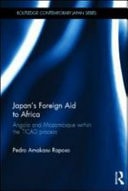
Dynamics of Japan's Relations with Africa
0
0
As an Amazon Associate and affiliate partner, Menrva Books earns from qualifying purchases. Learn more
Author Description
This is the first book to examine in-depth Japan's relations with Africa. Japan's dependence on raw materials from South Africa made it impossible for Tokyo in the 1970s and 1980s to support other African states in their fight against the minority government and its policy of apartheid. Kweku Ampiah's detailed analysis of Japan's political, economic and diplomatic relations with sub-Saharan Africa from 1974 to the early 1990s makes it clear that Japan was lukewarm in the struggle against apartheid. Case studies of Tanzania and Nigeria dissect Japan's trade, aid and investment policies in sub-Saharan Africa. This is the first book to examine in depth Japan's relations with Africa.
Menrva's Summary
THE THESIS
This book investigates the complex political and economic motivations behind Japan's diplomatic stance toward sub-Saharan Africa during the late twentieth century. Kweku Ampiah, an expert in international relations, utilizes historical trade data and diplomatic records to argue that Japan's foreign policy was primarily driven by its dependence on raw materials. By examining the period between 1974 and the early 1990s, the author demonstrates how economic pragmatism often superseded moral or political alignment with African states during the anti-apartheid struggle.
THE SCOPE MAP
What You Will Find
- Analysis of Japan's trade, aid, and investment policies in sub-Saharan Africa.
- Historical examination of Japan's diplomatic response to the South African apartheid regime.
- Comparative case studies focusing on the specific bilateral relations with Tanzania and Nigeria.
- Evaluation of the tension between Japan's global economic interests and its international political commitments.
THE AUTHORITY PERSPECTIVE
Scholars and historians recognize this work as a foundational text for understanding the evolution of Japan-Africa relations during the Cold War era. Readers frequently note the academic density of the prose and the author's rigorous use of primary source documentation to support his findings.
Page Count:
0
Publication Date:
1997-01-01
Publisher:
Routledge
ISBN-10:
0203281233
ISBN-13:
9780203281239
History
Economics
Relations Internationales
Africa
International relations
Japan