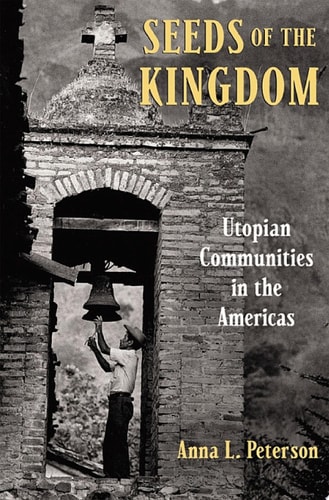
Seeds of the Kingdom: Utopian Communities in the Americas
0
0
As an Amazon Associate and affiliate partner, Menrva Books earns from qualifying purchases. Learn more
Author Description
In these skeptical and disillusioned times, there are still groups of people scattered throughout the world who are trying to live out utopian dreams. These communities challenge the inevitability and morality of dominant political and economic models. By putting utopian religious ethics into practice, they attest to the real possibility of social alternatives. In Seeds of the Kingdom, Anna L. Peterson reflects on the experiences of two very different communities, one inhabited by impoverished former refugees in the mountains of El Salvador and the other by Amish farmers in the Midwestern U.S. What makes these groups stand out among advocates of environmental protection, political justice, and sustainable development is their religious orientation. They aim, without apology, to embody the reign of God on earth. The Salvadoran community is grounded in Roman Catholic social thought, while the Amish adhere to Anabaptist tradition. Peterson offers a detailed portrait of these communities' history, social organization, religious life, environmental values, and agricultural practices. She discovers both practical and ideological commonalities in these two comparatively successful and sustainable communities, including a strong collective identity, deep attachment to local landscapes, a desire to preserve non-human as well as human lives, and, perhaps unexpectedly, a utopian horizon that provides both goals and the hope of reaching them. By examining the process by which people struggle to live according to a transcendent value system, she sheds light on both the actual and the potential place of religion in public life. Peterson argues that the Amish and Salvadoran communities, geographically and culturally removed from the industrialized West, have relevance for the political and environmental problems of the developed world. These communities have succeeded in the face of significant internal and external challenges, offering important practical and theoretical lessons
Menrva's Summary
THE THESIS
This work investigates how religious utopian communities in disparate geographic and cultural contexts maintain sustainable social and environmental practices in opposition to dominant economic models. Anna L. Peterson, a scholar of religion and social ethics, utilizes a comparative framework to analyze two distinct groups: a community of former refugees in El Salvador and an Amish settlement in the Midwestern United States. By examining their shared commitment to embodying transcendent values, she argues that these groups offer viable, practical lessons for addressing contemporary political and environmental crises in the industrialized world.
THE SCOPE MAP
What You Will Find
- Comparative analysis of Roman Catholic social thought and Anabaptist traditions.
- Examination of collective identity formation and attachment to local landscapes.
- Evaluation of sustainable agricultural practices and environmental stewardship.
- Discussion of the role of religious ethics in public life and social organization.
Scope Limits
- The study does not provide an exhaustive survey of all global utopian movements.
- The analysis focuses specifically on two case studies rather than broad sociological generalizations.
THE AUTHORITY PERSPECTIVE
Scholars and readers frequently note the clarity with which Peterson bridges the gap between theological theory and practical social application. Experts highlight this text as a valuable contribution to the study of religion's role in sustainable development and alternative community building.
Page Count:
199
Publication Date:
2005-01-01
Publisher:
Oxford University Press
ISBN-10:
0190293063
ISBN-13:
9780190293062
Religion
Christian sociology
Sociology
Catholic Church
Anthropology
Community Tags
Similar Books