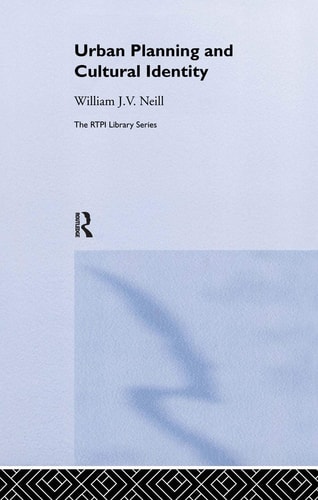
Urban Planning and Cultural Identity
0
0
As an Amazon Associate and affiliate partner, Menrva Books earns from qualifying purchases. Learn more
Author Description
Urban Planning and Cultural Identity reviews the intense spatiality of conflict over identity construction in three cities where culture and place identity are not just post-modernist playthings but touch on the raw sensibilities of who people define themselves to be. Berlin as the reborn German capital has put 'coming to terms with' the Holocaust and the memory of the GDR full square at the centre of urban planning. Detroit raises questions about the impotence and complicity of planners in the face of the most extreme metropolitan spatial apartheid in the United States and where African-American identity now seems set on a separatist course. In Belfast, in the clash of Irish nationalist and Ulster unionist traditions, place can take on intense emotional meanings in relation to which planners as 'mediators of space' can seem ill equipped.The book, drawing on extensive interview sources in the case study cities, poses a question of broad relevance. Can planners fashion a role in using environmental concerns such as Local Agenda 21 as a vehicle of building a sense of common citizenship in which cultural difference can embed itself?
Menrva's Summary
THE THESIS
This book investigates whether urban planning can serve as a mechanism for fostering common citizenship and social cohesion in cities defined by deep-seated cultural and historical conflict. William J. V. Neill, an expert in urban studies, utilizes a comparative analysis of three distinct metropolitan environments to examine how spatial design interacts with identity construction. The work argues that planners often struggle to mediate between competing cultural narratives, yet it explores the potential for environmental initiatives to bridge these divides.
THE SCOPE MAP
What You Will Find
- Comparative case studies of Berlin, Detroit, and Belfast.
- Analysis of the intersection between urban spatiality and collective identity.
- Qualitative data derived from extensive interviews with local stakeholders and planners.
- Evaluation of the role of environmental frameworks like Local Agenda 21 in building civic unity.
THE AUTHORITY PERSPECTIVE
Experts recognize this work as a significant contribution to the study of urban governance and the politics of space. Readers frequently note the academic density of the prose and the author's ability to synthesize complex historical contexts with contemporary planning challenges.
Page Count:
261
Publication Date:
2004-01-01
Publisher:
Taylor & Francis Group Plc
ISBN-10:
0203408799
ISBN-13:
9780203408797
Sociology
urban planning
Geography