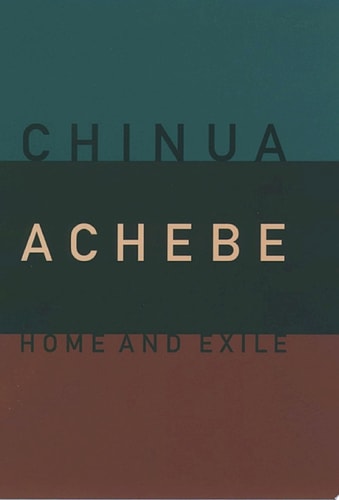
Home and Exile
0
0
As an Amazon Associate and affiliate partner, Menrva Books earns from qualifying purchases. Learn more
Author Description
Chinua Achebe is Africa's most prominent writer, the author of Things Fall Apart, the best known--and best selling--novel ever to come out of Africa. His fiction and poetry burn with a passionate commitment to political justice, bringing to life not only Africa's troubled encounters with Europe but also the dark side of contemporary African political life. Now, in Home and Exile, Achebe reveals the man behind his powerful work. Here is an extended exploration of the European impact on African culture, viewed through the most vivid experience available to the author--his own life. It is an extended snapshot of a major writer's childhood, illuminating his roots as an artist. Achebe discusses his English education and the relationship between colonial writers and the European literary tradition. He argues that if colonial writers try to imitate and, indeed, go one better than the Empire, they run the danger of undervaluing their homeland and their own people. Achebe contends that to redress the inequities of global oppression, writers must focus on where they come from, insisting that their value systems are as legitimate as any other. Stories are a real source of power in the world, he concludes, and to imitate the literature of another culture is to give that power away. Home and Exile is a moving account of an exceptional life. Achebe reveals the inner workings of the human conscience through the predicament of Africa and his own intellectual life. It is a story of the triumph of mind, told in the words of one of this century's most gifted writers.
Menrva's Summary
THE THESIS
How does the colonial legacy shape the identity and creative output of the African writer? Chinua Achebe, a seminal figure in African literature, utilizes his personal history and professional experience to examine the tension between European literary traditions and indigenous African narratives. He argues that colonial education systems often compel writers to devalue their own cultural heritage, and he posits that reclaiming one's own stories is a necessary act of intellectual and political liberation.
THE SCOPE MAP
What You Will Find
- Analysis of the impact of English colonial education on African writers
- Critique of the European literary canon as a tool of cultural hegemony
- Reflections on the author's childhood and personal development as an artist
- Arguments regarding the power of storytelling in asserting cultural legitimacy
Scope Limits
- The text does not provide a comprehensive history of African literature
- It does not offer a detailed political history of Nigeria beyond the author's personal experience
THE AUTHORITY PERSPECTIVE
Scholars and critics recognize this work as a vital contribution to post-colonial discourse, frequently citing it for its clarity and intellectual rigor. Readers often note that the text serves as an accessible entry point into Achebe's broader philosophy regarding the role of the writer in society.
Page Count:
128
Publication Date:
2000-01-01
Publisher:
Oxford University Press
ISBN-10:
0190285559
ISBN-13:
9780190285555
History
Non-Fiction
Autobiography
English & College Success
Biography Autobiography
Literary Criticism
English
Exiles
Essays
African
Africa
African history
Authors biography
Community Tags
Other Editions(5)



Similar Books

Reader Comments
Share Your Thoughts
No comments yet. Be the first to share your thoughts!