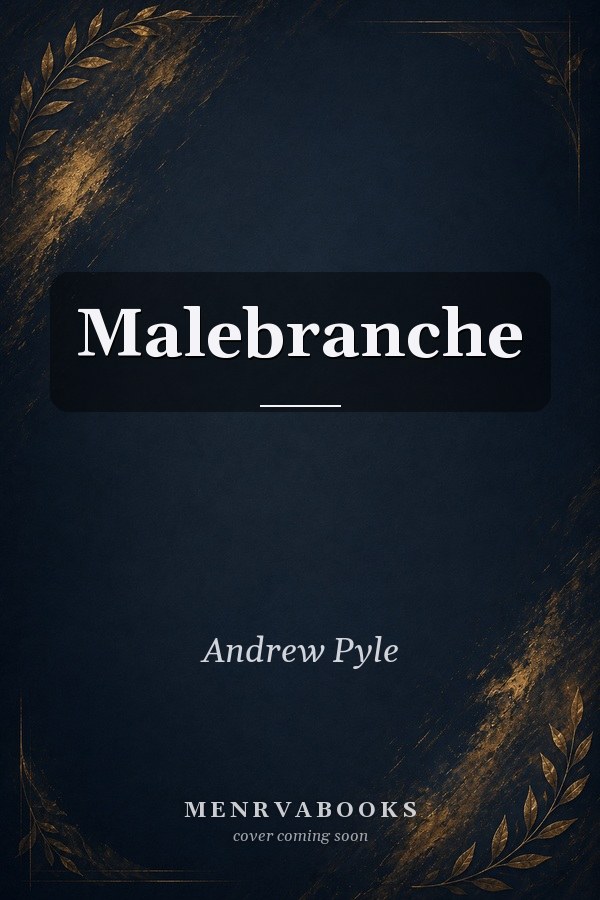
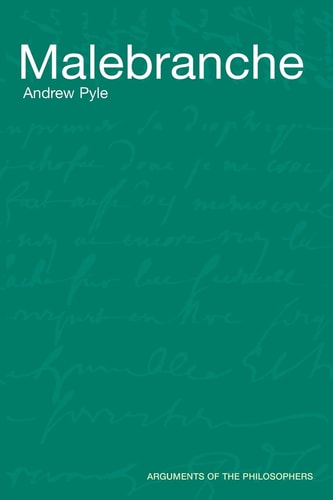
Malebranche
0
0
As an Amazon Associate and affiliate partner, Menrva Books earns from qualifying purchases. Learn more
Author Description
Nicolas Malebranche (1638-1715) was one of the most important philosophers of the seventeenth century after Descartes, and one of the ablest champions and most penetrating critics of Cartesian ideas. Andrew Pyle examines the entirety of Malebranche's writings, including the famous Search After Truth, which was admired and criticised by both Leibniz and Locke. Pyle presents an integrated account of Malebranche's central theses, occasionalism and the 'Vision in God'. He goes on to explore and assess Malebranche's contribution to debates on physics and biology, and his views on the soul, self-knowledge, grace and the freedom of the will. This penetrating and wide-ranging study will be of interest to philosophers and also to historians of science and philosophy, theologians, and students of the Enlightenment or seventeenth-century thought.
Menrva's Summary
THE THESIS
This study investigates the philosophical framework of Nicolas Malebranche, specifically evaluating his role as a primary successor and critic of Cartesian thought. Andrew Pyle, an expert in early modern philosophy, synthesizes Malebranche's extensive body of work to clarify his contributions to metaphysics, physics, and theology. The text argues that Malebranche's influence on contemporaries like Leibniz and Locke necessitates a re-examination of his core doctrines, particularly his theories on occasionalism and the 'Vision in God'.
THE SCOPE MAP
What You Will Find
- A comprehensive analysis of Malebranche's seminal work, The Search After Truth.
- An integrated examination of his metaphysical doctrines, including occasionalism and the 'Vision in God'.
- A detailed assessment of his contributions to seventeenth-century physics and biology.
- A critical review of his theological and philosophical arguments regarding the soul, grace, and free will.
THE AUTHORITY PERSPECTIVE
Scholars and historians of philosophy recognize this work as a rigorous, wide-ranging study of a pivotal Enlightenment-era figure. Readers frequently note the academic density of the prose, which serves as a foundational resource for students and researchers of early modern intellectual history.
Page Count:
289
Publication Date:
2003-01-01
Publisher:
Taylor & Francis Group
ISBN-10:
0203417704
ISBN-13:
9780203417706
Biography
Philosophy
Seventeenth Century
Philosophy & Religion
Intellectual History
Community Tags
Other Editions(5)

Similar Books