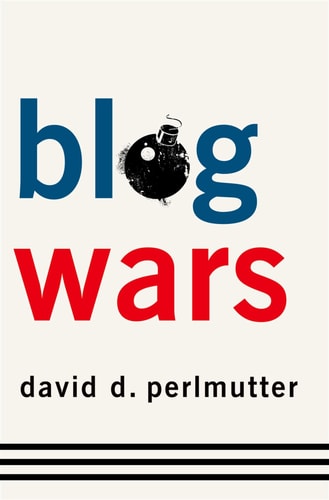
Blogwars
0
0
As an Amazon Associate and affiliate partner, Menrva Books earns from qualifying purchases. Learn more
Author Description
Political blogs have grown astronomically in the last half-decade. In just one month in 2005, for example, popular blog DailyKos received more unique visitors than the population of Iowa and New Hampshire combined. But how much political impact do bloggers really have? In Blogwars, David D. Perlmutter examines this rapidly burgeoning phenomenon, exploring the degree to which blogs influence--or fail to influence--American political life. Challenging the hype, Perlmutter points out that blogs are not that powerful by traditional political measures: while bloggers can offer cogent and convincing arguments and bring before their readers information not readily available elsewhere, they have no financial, moral, social, or cultural leverage to compel readers to engage in any particular political behavior. Indeed, blogs have scored mixed results in their past political crusades. But in the end, Perlmutter argues that blogs, in their wide dissemination of information and opinions, actually serve to improve democracy and enrich political culture. He highlights a number of the particularly noteworthy blogs from the specialty to the superblog-including popular sites such as Daily Kos, The Huffington Post, Powerlineblog, Instapundit, and Talking Points Memo--and shows how blogs are becoming part of the tool kit of political professionals, from presidential candidates to advertising consultants. While the political future may be uncertain, it will not be unblogged. For many Internet users, blogs are the news and editorial sites of record, replacing traditional newspapers, magazines, and television news programs. Blogwars offers the first full examination of this new and controversial force on America's political landscape.
Menrva's Summary
THE THESIS
This book investigates the extent to which political blogs influence American political life and whether their impact matches the surrounding media hype. David D. Perlmutter, a scholar of political communication, utilizes data from the mid-2000s and case studies of prominent blogs to argue that while these platforms lack traditional institutional leverage, they serve a vital role in disseminating information and enriching democratic discourse. He posits that blogs have become an integrated component of the modern political professional's toolkit, even if their ability to dictate specific political outcomes remains limited.
THE SCOPE MAP
What You Will Find
- Analysis of high-traffic political blogs including Daily Kos, The Huffington Post, and Talking Points Memo
- Examination of the integration of blogging into professional political campaigns and advertising strategies
- Comparison of blog influence against traditional media outlets like newspapers and television
Scope Limits
- The analysis is primarily focused on the American political landscape circa 2005
- The text does not cover the evolution of social media platforms that emerged after the initial rise of the blogosphere
THE AUTHORITY PERSPECTIVE
Experts recognize this work as a foundational study of early digital political communication and its intersection with traditional media. Readers frequently note that the text provides a clear, academic framework for understanding the limitations and potential of online political discourse.
Page Count:
273
Publication Date:
2008-01-01
Publisher:
Oxford University Press
ISBN-10:
0190294167
ISBN-13:
9780190294168
Internet & WWW
Communication
Journalism
United States
Professional Career & Trade
Media Studies
Blogs
Mass Communication
Community Tags
Other Editions(2)
Similar Books