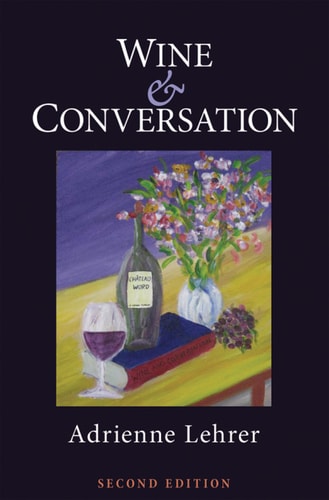
Wine and Conversation
0
0
As an Amazon Associate and affiliate partner, Menrva Books earns from qualifying purchases. Learn more
Author Description
The vocabulary of wine is large and exceptionally vibrant -- from straight-forward descriptive words like "sweet" and "fragrant", colorful metaphors like "ostentatious" and "brash", to the more technical lexicon of biochemistry. The world of wine vocabulary is growing alongside the current popularity of wine itself, particularly as new words are employed by professional wine writers, who not only want to write interesting prose, but avoid repetition and cliché. The question is, what do these words mean? Can they actually reflect the objective characteristics of wine, and can two drinkers really use and understand these words in the same way? In this second edition of Wine and Conversation, linguist Adrienne Lehrer explores whether or not wine drinkers (both novices and experts) can in fact understand wine words in the same way. Her conclusion, based on experimental results, is no. Even though experts do somewhat better than novices in some experiments, they tend to do well only on wines on which they are carefully trained and/or with which they are very familiar. Does this mean that the elaborate language we use to describe wine is essentially a charade? Lehrer shows that although scientific wine writing requires a precise and shared use of language, drinking wine and talking about it in casual, informal setting with friends is different, and the conversational goals include social bonding as well as communicating information about the wine. Lehrer also shows how language innovation and language play, clearly seen in the names of new wines and wineries, as well as wine descriptors, is yet another influence on the burgeoning and sometimes whimsical world of wine vocabulary.
Menrva's Summary
THE THESIS
Does the specialized vocabulary used to describe wine accurately reflect objective characteristics, or is it a subjective construct that fails to facilitate shared understanding? Adrienne Lehrer, a professional linguist, investigates the intersection of language and sensory experience by analyzing the lexicon of wine writing and casual conversation. Utilizing experimental data and linguistic analysis, she examines whether experts and novices interpret wine descriptors consistently, ultimately arguing that wine language is often more about social interaction than precise communication.
THE SCOPE MAP
What You Will Find
- Analysis of wine descriptors ranging from simple sensory terms to technical biochemical jargon
- Experimental results comparing the vocabulary comprehension of wine experts versus novices
- Exploration of language innovation and creative naming conventions in the wine industry
Scope Limits
- The text does not serve as a guide to wine tasting or a comprehensive dictionary of viticulture terminology
- It does not provide an exhaustive history of wine production or regional wine styles
THE AUTHORITY PERSPECTIVE
Experts in linguistics and oenology recognize this work as a significant contribution to the study of sensory language and social communication. Readers frequently note the accessible yet rigorous nature of Lehrer's analysis, which bridges the gap between academic linguistic theory and the practical, often whimsical, world of wine appreciation.
Page Count:
328
Publication Date:
2009-01-01
Publisher:
Oxford University Press
ISBN-10:
0190294655
ISBN-13:
9780190294656
Non-Fiction
Semantics
Linguistics
English & College Success
English
Communication
Pragmatism
Wine
Community Tags
Similar Books