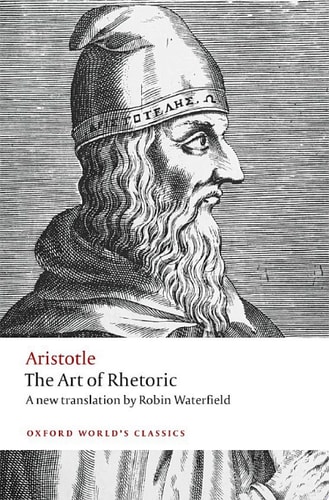
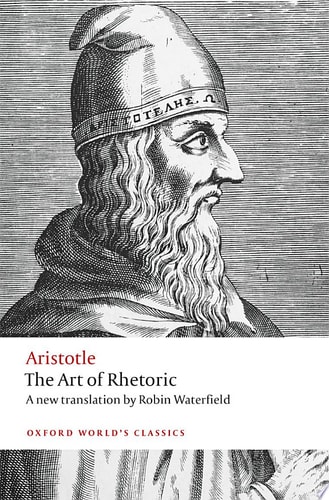
The Art of Rhetoric
0
0
As an Amazon Associate and affiliate partner, Menrva Books earns from qualifying purchases. Learn more
Author Description
For all men are persuaded by considerations of where their interest lies... Aristotle's Art of Rhetoric is the earliest systematic treatment of the subject, and it remains among the most incisive works on rhetoric that we possess. In it, we are asked: What is a good speech? What do popular audiences find persuasive? How does one compose a persuasive speech? Aristotle considers these questions in the context of the ancient Greek democratic city-state, in which large audiences of ordinary citizens listened to speeches pro and con before casting the votes that made the laws, decided the policies, and settled the cases in court. Persuasion by means of the spoken word was the vehicle for conducting politics and administering the law. After stating the basic principles of persuasive speech, Aristotle places rhetoric in relation to allied fields such as politics, ethics, psychology, and logic, and he demonstrates how to construct a persuasive case for any kind of plea on any subject of communal concern. Aristotle views persuasion flexibly, examining how speakers should devise arguments, evoke emotions, and demonstrate their own credibility. The treatise provides ample evidence of Aristotle's unique and brilliant manner of thinking, and has had a profound influence on later attempts to understand what makes speech persuasive. The new translation of the text is accompanied by an introduction discussing the political, philosophical, and rhetorical background to Aristotle's treatise, as well as the composition and transmission of the original text and an account of Aristotle's life.
Menrva's Summary
THE THESIS
What constitutes the fundamental mechanics of persuasive speech within a democratic society? Aristotle, a foundational figure in Western philosophy, examines the art of rhetoric as a systematic discipline. He argues that persuasion is not merely an intuitive talent but a structured craft involving the strategic use of logic, emotional appeal, and speaker credibility, specifically tailored for the deliberative and judicial contexts of the ancient Greek city-state.
THE SCOPE MAP
What You Will Find
- Systematic analysis of rhetorical proofs: ethos, pathos, and logos
- Categorization of speech types: deliberative, forensic, and epideictic
- Examination of the relationship between rhetoric, ethics, and political science
- Historical context regarding the democratic processes of ancient Greece
Scope Limits
- The text does not provide a modern manual for contemporary digital marketing or corporate communication
- It does not offer a comprehensive biography of Aristotle beyond the scope of his rhetorical work
THE AUTHORITY PERSPECTIVE
Scholars and students of communication consistently identify this work as the foundational text for the study of rhetoric. Readers frequently note the academic density of the prose, which requires careful study to fully grasp the nuances of Aristotelian logic and its application to public discourse.
Page Count:
288
Publication Date:
2018-01-01
Publisher:
OUP Oxford
ISBN-10:
0191036250
ISBN-13:
9780191036255
Philosophy
Non-Fiction
Rhetoric
Communication
Community Tags
Other Editions(8)


Similar Books




Reader Comments
Share Your Thoughts
No comments yet. Be the first to share your thoughts!