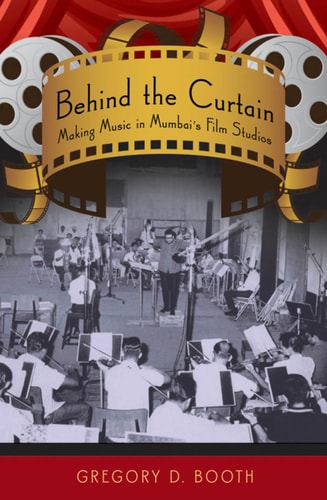
Behind the Curtain: Making Music in Mumbai's Film Studios
0
0
As an Amazon Associate and affiliate partner, Menrva Books earns from qualifying purchases. Learn more
Author Description
Beginning in the 1930s, men and a handful of women came from India's many communities-Marathi, Parsi, Goan, North Indian, and many others--to Mumbai to work in an industry that constituted in the words of some, "the original fusion music." They worked as composers, arrangers, assistants, and studio performers in one of the most distinctive popular music and popular film cultures on the planet. Today, the songs played by Mumbai's studio musicians are known throughout India and the Indian diaspora under the popular name "Bollywood," but the musicians themselves remain, in their own words, "behind the curtain"--the anonymous and unseen performers of one of the world's most celebrated popular music genres. Now, Gregory D. Booth offers a compelling account of the Bollywood film music industry from the perspective of the musicians who both experienced and shaped its history. In a rare insider's look at the process of musical production from the late 1940s to the mid 1990s, before the advent of digital recording technologies, Booth explains who these unknown musicians were and how they came to join the film music industry. On the basis of a fascinating set of first-hand accounts from the musicians themselves, he reveals how the day-to-day circumstances of technology and finance shaped both the songs and the careers of their creator and performers. Booth also unfolds the technological, cultural, and industrial developments that led to the enormous studio orchestras of the 1960s-90s as well as the factors which ultimately led to their demise in contemporary India. Featuring an extensive companion website with video interviews with the musicians themselves, Behind the Curtain is a powerful, ground-level view of this globally important music industry.
Menrva's Summary
THE THESIS
This book investigates the historical development, labor practices, and eventual decline of the studio musician culture within the Mumbai film industry from the late 1940s to the mid-1990s. Dr. Gregory Booth, an ethnomusicologist, utilizes extensive primary source interviews to document the lives of the anonymous performers who defined the sound of Bollywood. The text argues that the unique fusion of Indian and Western musical traditions was a direct result of the specific technological, financial, and social conditions present in Mumbai's recording studios.
THE SCOPE MAP
What You Will Find
- Historical analysis of the Indian film music industry from the 1930s to the 1990s.
- Documentation of the transition from large studio orchestras to digital recording environments.
- First-hand accounts from composers, arrangers, and session musicians.
- Examination of the socio-economic factors influencing musical production.
Scope Limits
- The book does not provide a comprehensive history of the Bollywood film industry itself, focusing instead specifically on the music production sector.
- The analysis concludes in the mid-1990s and does not cover the contemporary digital-only era in significant detail.
THE AUTHORITY PERSPECTIVE
Scholars and musicologists frequently cite this work as a foundational text for understanding the labor history of Indian popular music. Readers often note the academic density of the prose, which provides a rigorous look at the intersection of technology and cultural production.
Page Count:
331
Publication Date:
2008-01-01
Publisher:
Oxford University Press
ISBN-10:
0190296240
ISBN-13:
9780190296247
History
Music
Motion pictures
Criticism history
Bollywood
Film History
Asian History
Humanities
India
Community Tags
Similar Books