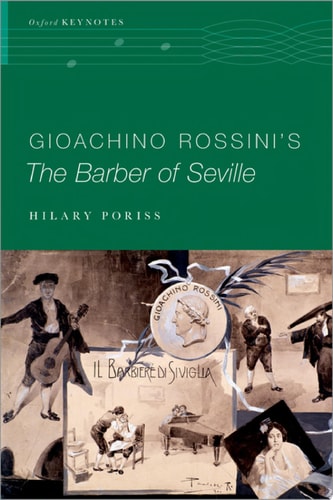
Gioachino Rossini's The Barber of Seville
0
0
As an Amazon Associate and affiliate partner, Menrva Books earns from qualifying purchases. Learn more
Author Description
Gioachino Rossini's The Barber of Seville surveys the opera's fascinating performance history, mapping out the myriad changes that have affected the work since its premiere, exploring many of the personalities responsible for those alterations, and taking into account the range of reactions that these changes have prompted in spectators and critics from the nineteenth century to the present. Opening with a wide-ranging overview of the types of alterations that have been imposed on Rossini's score for the past two centuries, the first chapter addresses the mechanics behind these changes as well as the cultural forces that both fostered and encouraged them. The book next looks at some of the opera's earliest revivals, drawing attention to alterations that were made to the score and to individual singers who were responsible for the changes, especially those who appeared in the roles of Almaviva and Bartolo. An entire chapter is devoted to Rosina, examining the wide array of creative liberties that prima donnas have unremittingly and unrepentantly taken with their interpretations of Rossini's character. The final sections turn to the opera's recent history, observing how the Rossini Renaissance brought with it a new dedication to the "work concept" and to shedding the types of alterations that had long characterized performances of this work. The book closes with a consideration of operatic consumerism from the nineteenth century to the present, exploring the myriad ways that one can now experience The Barber of Seville in all its recorded, digitized, and commodified glory.
Menrva's Summary
THE THESIS
This book investigates the evolution of Gioachino Rossini's The Barber of Seville by analyzing its performance history and the cultural forces that have shaped its interpretation over two centuries. Hilary Poriss, a scholar of nineteenth-century opera, utilizes historical scores, performance records, and critical reception to argue that the work has been in a constant state of flux due to the creative liberties taken by singers and the shifting expectations of audiences. The text examines the transition from a tradition of fluid, performer-driven adaptation to the modern emphasis on the composer's original score.
THE SCOPE MAP
What You Will Find
- Analysis of performance alterations from the nineteenth century to the present
- Case studies focusing on the roles of Almaviva, Bartolo, and Rosina
- Examination of the impact of the Rossini Renaissance on modern performance standards
- Discussion of operatic consumerism and digital commodification
Scope Limits
- Does not provide a comprehensive musical theory analysis of the score itself
- Focuses primarily on performance history rather than the biographical details of Rossini's life
THE AUTHORITY PERSPECTIVE
Experts recognize this work as a significant contribution to the study of performance practice and the history of operatic interpretation. Readers frequently note the academic density of the prose, which provides a rigorous look at how historical context influences the presentation of classical works.
Page Count:
172
Publication Date:
2021-01-01
Publisher:
Oxford University Press
ISBN-10:
0190299665
ISBN-13:
9780190299668
Music
Humanities
Criticism history
Music History
Opera
Community Tags
Other Editions(3)
Similar Books