The Flower of Paradise: Marian Devotion and Secular Song in Medieval and Renaissance Music
0
0
As an Amazon Associate and affiliate partner, Menrva Books earns from qualifying purchases. Learn more
Author Description
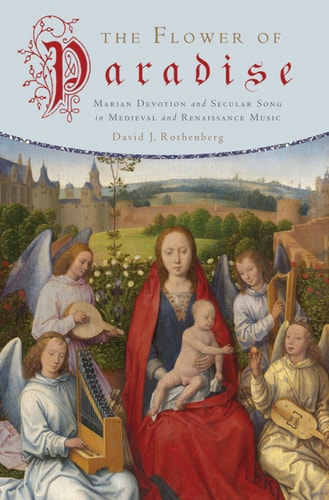
There is a striking similarity between Marian devotional songs and secular love songs of the late Middle Ages and Renaissance. Two disparate genres--one sacred, the other secular; one Latin, the other vernacular--both praise an idealized, impossibly virtuous woman. Each does so through highly stylized derivations of traditional medieval song forms--Marian prayer derived from earlier Gregorian chant, and love songs and lyrics from medieval courtly song. Yet despite their obvious similarities, the two musical and poetic traditions have rarely been studied together. Author David J. Rothenberg takes on this task with remarkable success, producing a useful and broad introduction to Marian music and liturgy, and then coupling that with an incisive comparative analysis of these devotional forms and the words and music of secular love songs of the period. The Flower of Paradise examines the interplay of Marian devotional and secular poetics within polyphonic music from ca. 1200 to ca. 1500. Through case studies of works that demonstrate a specific symbolic resonance between Marian devotion and secular song, the book illustrates the distinctive ethos of this period in European culture. Rothenberg makes use of an impressive command of liturgical and religious studies, literature and poetry, and art history to craft a study with wide application across disciplinary boundaries. With its broad scope and unique, incisive analysis, this book will open up new ways of thinking about the history and development of secular and sacred music and the Marian tradition for scholars, students, and anyone with an interest in medieval and Renaissance religious culture.
Menrva's Summary
THE THESIS
This book investigates the striking thematic and structural parallels between Marian devotional songs and secular love songs in late medieval and Renaissance music. Author David J. Rothenberg, an expert in musicology and religious history, utilizes a comparative framework to analyze how these two seemingly disparate genres—one sacred and one secular—converged through shared poetic and musical conventions. By examining the idealized portrayal of women in both traditions, Rothenberg argues that the boundaries between the sacred and the profane were far more porous than traditional musicological studies have previously acknowledged.
THE SCOPE MAP
What You Will Find
- Comparative analysis of polyphonic music from ca. 1200 to ca. 1500
- Case studies of specific musical works demonstrating symbolic resonance
- Integration of liturgical studies, poetry, and art history
- Examination of Gregorian chant derivations alongside courtly song forms
Scope Limits
- The study focuses primarily on European musical traditions within the specified three-century window
- It does not provide an exhaustive catalog of all Marian compositions from the period
THE AUTHORITY PERSPECTIVE
Scholars and musicologists frequently cite this work for its interdisciplinary approach to medieval and Renaissance cultural history. Readers often note the academic density of the prose, which is balanced by clear, incisive analysis that makes it a valuable resource for both students and specialists in the field.
Page Count:
282
Publication Date:
2011-01-01
Publisher:
Oxford University Press
ISBN-10:
0190453362
ISBN-13:
9780190453367
Religion
Criticism history
Music History
Humanities
Musicology
Medieval Art
Cultural History
Community Tags
Similar Books