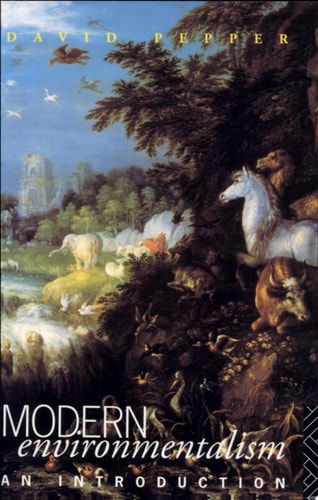
Modern Environmentalism
0
0
As an Amazon Associate and affiliate partner, Menrva Books earns from qualifying purchases. Learn more
Author Description
Modern Environmentalism presents a comprehensive introduction to environmentalism, the history of attitudes to nature and environment, and how these ideas relate to modern environmental ideologies.Examining key environmental ideas within their social and historical context, the book outlines radical environmentalist approaches to valuing nature, to economics, third world development, technology, ecofeminism and social change. This entirely new account interprets and synthesises the explosion of writing on the environment since the appearance of Pepper's earlier work, The Roots of Modern Environmentalism. Pre-modern ideas about nature and humankind's relationship to it, the developments in science, and the roots of radical environmentalism in nineteenth and twentieth century movements are surveyed. The main influences include Malthus, Darwin and Haeckel, utopian socialism, romanticism, and organic and holistic systems thinkers. Science is placed at the heart of the society/nature debate as the major constituent of our cultural filter, explaining how postmodern ideas of subjectivity and the breakdown of scientific authority have developed and scientific 'truths' about nature have become divorced from their social and ideological context. Modern Environmentalism offers a greater understanding of environmentalism and the environmental debate, and the different approaches to establishing the desired ecological society.
Menrva's Summary
THE THESIS
This book investigates the historical, social, and ideological foundations of modern environmentalism to determine how these frameworks shape contemporary attitudes toward nature and ecological policy. David Pepper, an established scholar in environmental studies, synthesizes a vast array of literature to trace the evolution of environmental thought from pre-modern concepts to current radical movements. By examining the influence of figures like Malthus, Darwin, and Haeckel alongside the rise of postmodernism, the author provides a critical analysis of how scientific authority and cultural filters dictate our relationship with the environment. The text argues that understanding the social context of these ideas is essential for developing a coherent vision of an ecological society.
THE SCOPE MAP
What You Will Find
- Historical analysis of environmental ideologies from the nineteenth century to the present.
- Examination of the intersection between science, technology, and social change.
- Discussion of radical environmentalist approaches including ecofeminism and utopian socialism.
- Critical review of the breakdown of scientific authority and its impact on environmental policy.
THE AUTHORITY PERSPECTIVE
Experts recognize this work as a significant synthesis of environmental history and social theory, often utilized in academic settings to provide context for modern ecological debates. Readers frequently note the academic density of the prose, which serves as a foundational resource for those seeking to understand the ideological roots of current environmental movements.
Page Count:
0
Publication Date:
2004-01-01
Publisher:
Taylor & Francis Group Plc
ISBN-10:
0203720482
ISBN-13:
9780203720486
Politics
Philosophy
Science
History
Histoire
E cologie
Philosophie
Protection
Nature
Development
Sociology
Umweltschutz
Environmental Conservation
Conservation
Conservacio n
E cologisme
Écologisme
Milieugedrag
Theorie
Ecologi a
Géographie
Environnement
Historia
Nonfiction
Filosofi a
Nature conservation
Natuurbehoud