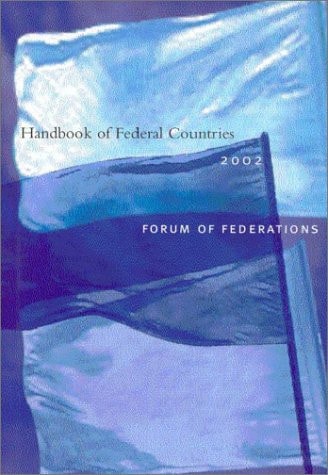
Handbook of Federal Countries, 2002
0
0
As an Amazon Associate and affiliate partner, Menrva Books earns from qualifying purchases. Learn more
Author Description
Contains articles on the twenty-one countries that classify themselves as federations as wee as four additional states whose systems incorporate significant elements of federalism. These articles examine the development, institutions, constitutions, and dynamics of federalism and include tables containing current political/geographic and economic/social information. The Handbook also includes essays on foreign policy in an era of globalization, minority rights, distribution of resources and power, and federalism in the European context.
Menrva's Summary
THE THESIS
This handbook provides a comprehensive examination of federalism across twenty-five nations. It delves into the historical development, institutional structures, constitutional frameworks, and evolving dynamics of federal systems in countries that self-identify as federations or incorporate significant federal elements. The book also features essays exploring contemporary issues such as globalization's impact on foreign policy, minority rights, resource and power distribution, and the specific context of federalism within Europe.
THE SCOPE MAP
- Analysis of federalism in twenty-one self-declared federations.
- Examination of four additional states with significant federal elements.
- Detailed exploration of the development, institutions, and constitutions of federal systems.
- Inclusion of tables with current political, geographic, economic, and social information.
- Essays on foreign policy in the context of globalization.
- Discussion of minority rights within federal structures.
- Analysis of resource and power distribution in federal states.
- Exploration of federalism within the European context.
THE AUTHORITY PERSPECTIVE
The Handbook of Federal Countries, 2002, offers a detailed comparative study of federal systems, providing valuable data and analysis for scholars and policymakers. Its scope covers a broad range of nations, offering insights into the diverse manifestations and challenges of federalism. The inclusion of contemporary essays broadens its relevance, addressing current global and regional political dynamics. This compilation serves as a significant reference for understanding the complexities of power-sharing and governance in federal states.
Page Count:
513
Publication Date:
2002-01-01
Publisher:
McGill-Queen's University Press
ISBN-10:
0773524193
ISBN-13:
9780773524194
History
Politics
Non-Fiction
Government
International relations
Comparative Politics
Community Tags
Similar Books