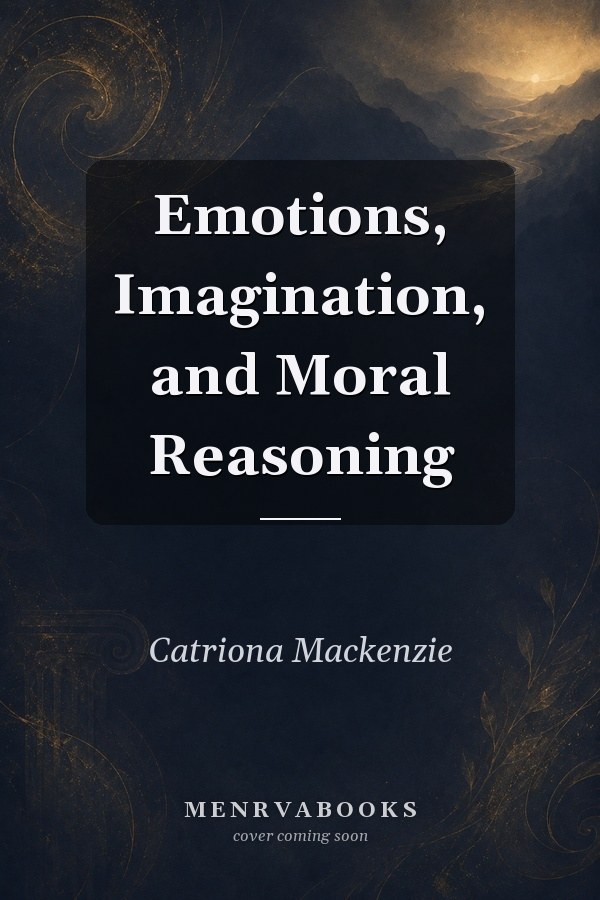
Emotions, Imagination, and Moral Reasoning
0
0
As an Amazon Associate and affiliate partner, Menrva Books earns from qualifying purchases. Learn more
Author Description
This volume brings together philosophical perspectives on emotions, imagination and moral reasoning with contributions from neuroscience, cognitive science, social psychology, personality theory, developmental psychology, and abnormal psychology. The book explores what we can learn about the role of emotions and imagination in moral reasoning from psychopathic adults in the general community, from young children, and adolescents with callous unemotional traits, and from normal child development. It discusses the implications for philosophical moral psychology of recent experimental work on moral reasoning in the cognitive sciences and neurosciences. Conversely, it shows what cognitive scientists and neuroscientists have still to learn from philosophical perspectives on moral reasoning, moral reflection, and moral responsibility. Finally, it looks at whether experimental methods used for researching moral reasoning are consistent with the work in social psychology and with philosophical thought on adult moral reasoning in everyday life. The volume's wide-ranging perspectives reflect the varied audiences for the volume, from students of philosophy to psychologists working in cognition, social and personality psychology, developmental psychology, abnormal psychology, and cognitive neuroscience.
Menrva's Summary
THE THESIS
This volume investigates the complex interplay between emotions, imagination, and moral reasoning by synthesizing philosophical inquiry with empirical findings from the cognitive and behavioral sciences. Editors Catriona Mackenzie and Robyn Langdon curate a collection of essays that bridge the gap between abstract moral philosophy and concrete psychological data. By examining both neurotypical development and clinical populations, the authors argue for a more integrated approach to understanding how human beings navigate moral landscapes.
THE SCOPE MAP
What You Will Find
- Analysis of moral reasoning in psychopathic adults and adolescents with callous unemotional traits
- Comparative study of philosophical moral psychology versus experimental cognitive science methods
- Examination of the role of imagination in moral reflection and responsibility
- Integration of developmental psychology and personality theory into ethical frameworks
THE AUTHORITY PERSPECTIVE
Experts identify this volume as a significant interdisciplinary resource that successfully challenges the traditional boundaries between analytic philosophy and empirical psychology. Scholars frequently note the academic density of the prose, which serves as a foundational text for researchers seeking to reconcile neuroscientific data with normative ethical theory.
Page Count:
380
Publication Date:
2012-01-01
Publisher:
Taylor & Francis Group
ISBN-10:
0203803132
ISBN-13:
9780203803134
Psychology
Philosophy
Imagination
Neuroscience
Developmental Psychology
Ethics
Community Tags
Similar Books