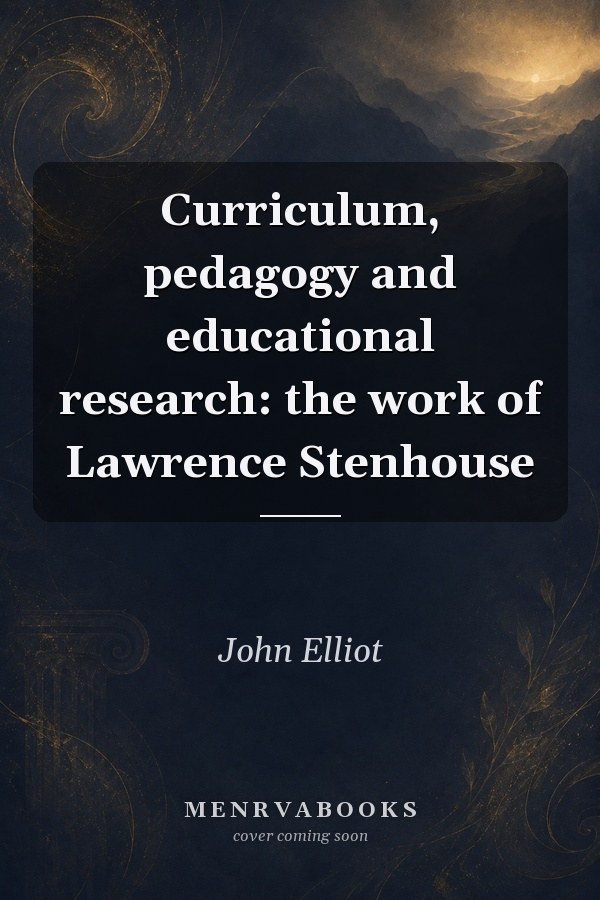
Curriculum, Pedagogy and Educational Research: The Work of Lawrence Stenhouse
0
0
As an Amazon Associate and affiliate partner, Menrva Books earns from qualifying purchases. Learn more
Author Description
Lawrence Stenhouse Was One Of The Most Distinguished, Original And Influential Educationalists Of His Generation. His Theories About Curriculum, Curriculum Development, Pedagogy, Teacher Research, And Research As A Basis For Teaching Remain Compelling And Fresh And Continue To Be A Counterpoint To Instrumental And Technocratic Thinking In Education. In This Book, Renowned Educationalists Describe Stenhouse's Contribution To Education, Explore The Contemporary Relevance Of His Thinking And Bring His Work And Legacy To The Attention Of A Wide Range Of Students, Teachers, Teacher Educators And Others Involved In Education. Stenhouse Saw The Primary Aim Of Education As The Development Of Individuality Through A Creative And Critical Engagement With Culture. He Was An Early Advocate Of Inclusive Education And Was Committed To Making Available To All Pupils An Education That Was Challenging And Empowering. For Stenhouse Many Of The Problems Of Education Stemmed Not So Much From Its Content As From The Terms And Conditions Under Which Students Were Required To Access It. Consequently He Pioneered An Approach To Curriculum Reform That Stressed The Quality Of The Educational Process And The Values That Defined It, As Opposed To 'rational Curriculum Planning', Which Stressed The Pre-specification Of Measureable Learning Outcomes. Stenhouse Devised The Curriculum Reform Movement's Most Ambitious Strategy, 'the Process Model', And Was Its Principal Theorist. His Idea Of 'the Teacher As Researcher' Lay At The Heart Of This Strategy As The Means By Which The Values That Define A Worthwhile Educational Process Could Be Progressively Realized By Teachers In Concrete Forms Of Action Within Their Classrooms And Schools. What Marked Out Stenhouse's Unique Contribution To The Field Of Curriculum Was His Distinctive Conceptualisation Of The Relationship Between The Teacher (authority), The Learner (autonomy) And The Subject Matter (understanding). Founded On His Epistemological Sceptici
Menrva's Summary
THE THESIS
This volume investigates the enduring theoretical contributions of Lawrence Stenhouse to the fields of curriculum development, pedagogy, and the role of the teacher as a researcher. Editors John Elliot and Nigel Norris, both established scholars in educational theory, compile a series of essays that analyze Stenhouse’s critique of technocratic educational models. The text argues that Stenhouse’s process-oriented approach remains a vital alternative to modern outcome-based assessment frameworks, emphasizing the development of student individuality through critical cultural engagement.
THE SCOPE MAP
What You Will Find
- An analysis of the 'Process Model' of curriculum reform as a counterpoint to pre-specified learning outcomes.
- Theoretical frameworks regarding the epistemological relationship between teacher authority, learner autonomy, and subject matter.
- Historical context on the development of the 'Teacher as Researcher' movement in classroom settings.
- Critical evaluations of Stenhouse’s advocacy for inclusive education and the democratization of challenging academic content.
THE AUTHORITY PERSPECTIVE
Experts recognize this collection as a foundational resource for understanding the intellectual history of 20th-century educational reform. Scholars frequently note that the text provides a necessary academic bridge for contemporary educators seeking to move beyond instrumentalist teaching practices.
Page Count:
0
Publication Date:
2012-01-01
Publisher:
Routledge
ISBN-10:
0203818113
ISBN-13:
9780203818114
Philosophy
Educational Research
Education
Teaching Methods
Pedagogy
Community Tags
Similar Books

Reader Comments
Share Your Thoughts
No comments yet. Be the first to share your thoughts!