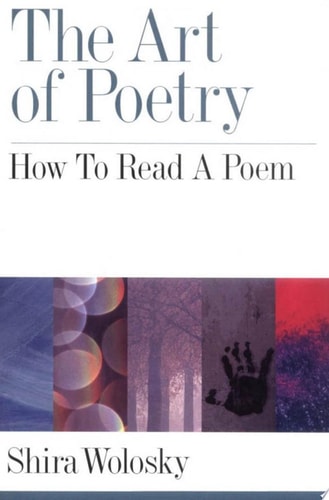
The Art of Poetry: How to Read a Poem
0
0
As an Amazon Associate and affiliate partner, Menrva Books earns from qualifying purchases. Learn more
Author Description
In The Art of Poetry, Shira Wolosky provides a dazzling introduction to an art whose emphasis on verbal music, wordplay, and dodging the merely literal makes it at once the most beguiling and most challenging of literary forms. A uniquely comprehensive, step-by-step introduction to poetic form, The Art of Poetry moves progressively from smaller units such as the word, line, and image, to larger features such as verse forms and voice. In fourteen engaging, beautifully written chapters, Wolosky explores in depth how poetry does what it does while offering brilliant readings of some of the finest lyric poetry in the English and American traditions. Both readers new to poetry and poetry veterans will be moved and enlightened as Wolosky interprets work by William Shakespeare, John Donne, William Blake, William Wordsworth, Emily Dickinson, Robert Frost, Sylvia Plath, and others. The book includes a superb two-chapter discussion of the sonnet's form and history, and represents the first poetry guide to introduce gender as a basic element of analysis.In contrast to many existing guides, which focus on selected formal aspects like metrics or present definitions and examples in a handbook format, The Art of Poetry covers the full landscape of poetry's subtle art while showing readers how to comprehend a poetic text in all its dimensions. Other special features include Wolosky's consideration of historical background for the developments she discusses, and the way her book is designed to acquaint or reacquaint readers with the core of the lyric tradition in English.Lively, accessible, and original, The Art of Poetry will be a rich source of inspiration for students, general readers, and those who teach poetry.
Menrva's Summary
THE THESIS
How can readers effectively decode the complex layers of meaning, verbal music, and structural nuance within the tradition of English and American lyric poetry? Shira Wolosky, an established scholar in literary studies, presents a systematic framework for analyzing poetic texts by moving from granular linguistic units to broader formal structures. The book argues that poetry functions through specific technical devices and historical contexts, which the author demonstrates through close readings of canonical poets ranging from Shakespeare to Plath. By integrating gender analysis and historical background, the text provides a comprehensive methodology for interpreting the mechanics of verse.
THE SCOPE MAP
What You Will Find
- A fourteen-chapter progression from word-level analysis to complex verse forms.
- A dedicated two-chapter examination of the history and structure of the sonnet.
- Integration of gender as a fundamental analytical lens for poetic interpretation.
- Close readings of works by Shakespeare, Donne, Blake, Wordsworth, Dickinson, Frost, and Plath.
Scope Limits
- The text focuses primarily on the English and American lyric traditions.
- It does not serve as a general handbook of poetic definitions but rather as a guide to interpretive practice.
THE AUTHORITY PERSPECTIVE
Critics and educators frequently cite this work as a foundational text for students and general readers seeking to move beyond literal interpretations of verse. The prose is noted for its accessibility and its ability to bridge the gap between academic literary theory and practical reading skills.
Page Count:
231
Publication Date:
2008-01-01
Publisher:
Oxford University Press
ISBN-10:
0190451629
ISBN-13:
9780190451622
Non-Fiction
Poetry
English & College Success
English
Literary Criticism
Writing Reference
Education
Poetics
English language versification
Community Tags
Similar Books