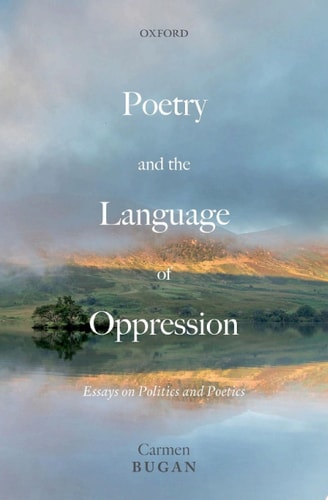
Poetry and the Language of Oppression: Essays on Politics and Poetics
0
0
As an Amazon Associate and affiliate partner, Menrva Books earns from qualifying purchases. Learn more
Author Description
A first-hand account of the creative process that engages with the language of oppression and with politics in our time. How does the poet become attuned to the language of the world's upheaval? How does one talk insightfully about suffering, without creating more of it? What is freedom in language and how does the poet who has endured political oppression write himself or herself free? What is literary testimony? Poetry and the Language of Oppression is a consideration of the creative process that rests on the conviction that poetry is of help in moments of public duress, providing an illumination of life and a healing language. Oppression, repression, expression, as well as their tools (prison, surveillance, gestures in language) have been with us in various forms throughout history, and this volume represents a particular aspect of these conditions of our humanity as they play out in our time, providing another instance of the communion, and sometimes confrontation, with the language that makes us human.
Menrva's Summary
THE THESIS
This collection of essays investigates how poets navigate and transform the language of political oppression into a medium for testimony and personal liberation. Carmen Bugan, a poet who experienced life under a totalitarian regime, draws upon her own history and the works of other writers to argue that poetry serves as a vital tool for illumination and healing during periods of public duress. She examines the intersection of surveillance, censorship, and creative expression to define the role of the poet as a witness to history.
THE SCOPE MAP
What You Will Find
- Analysis of the creative process under conditions of state surveillance and political repression.
- Theoretical frameworks regarding the nature of literary testimony.
- Comparative studies of poets who have endured and written through political trauma.
Scope Limits
- The text does not provide a comprehensive historical survey of all political poetry.
- It does not offer a technical manual for writing poetry, focusing instead on the philosophical and political implications of the act.
THE AUTHORITY PERSPECTIVE
Scholars and critics recognize this work as a significant contribution to the study of political poetics and the ethics of writing about suffering. Readers frequently note the reflective, personal nature of the prose, which balances academic inquiry with the lived experience of the author.
Page Count:
215
Publication Date:
2021-01-01
Publisher:
OUP Oxford
ISBN-10:
0192638777
ISBN-13:
9780192638779
Poetry
Literary Criticism
Bugan Carmen
Essays
Poetics
English & College Success
Sociology
English
In literature
Community Tags
Similar Books