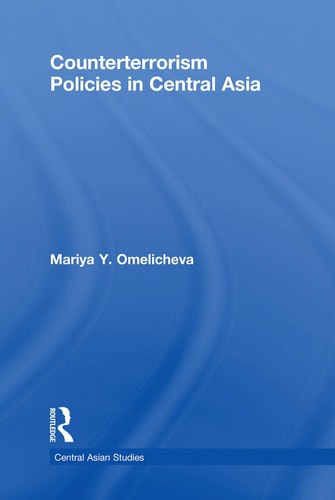
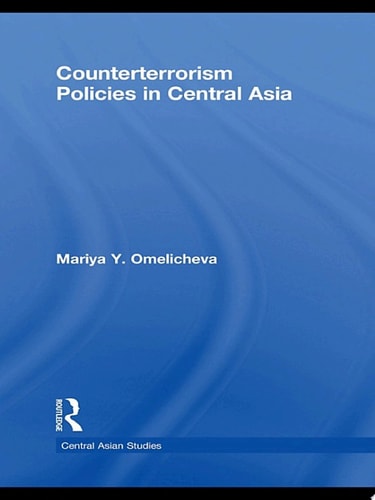
Counterterrorism Policies in Central Asia
0
0
As an Amazon Associate and affiliate partner, Menrva Books earns from qualifying purchases. Learn more
Author Description
During The Last Two Decades, Central Asian States Have Witnessed An Intense Revival Of Islamic Faith. Along With Its Moderate And Traditional Forms, Radical And Militant Islam Has Infiltrated Communities Of Muslims In Central Asia. Alarmed By The Border Incursions, Sporadic Terrorist Violence And Religious Anti-governmental Campaigns, The Leadership Of All Central Asian States Adopted Extensive Measures Against Radical Islam And Intensified Counterterrorism Policies. This Book Examines The Dangerous Tendency Of Counterterrorism Policies Of The Central Asian States To Grow More Alike Amid Propensities For Divergence And Attributes This Trend To The Impact Of The Social Context In Which These States Operate. It Underscores The Importance Of International Setting That Shapes Governments' Perceptions Of Terrorism And Their Counterterrorism Policies. Applying A Comprehensive Theoretical Framework, Which Integrates Different Mechanisms Of International Influences On State Behaviour, The Author Explains The Central Asian States' Perceptions Of Terrorist Threat And Their Counterterrorism Responses. The Book Analyses The Counterterrorism Policies Of Kazakhstan And Kyrgyzstan, The Two Central Asian States That Have Been Least Affected By Terrorist Violence And Islamism But Chose To Combat Those Threats Vigorously. Using Materials Derived From A Wide Range Of Sources, Including Legal Documents, Officials' Memoirs And Fieldwork, This Research Will Contribute To Studies In Asian Politics And National Security, And International Relations.
Menrva's Summary
THE THESIS
This book investigates why the counterterrorism policies of Central Asian states, particularly Kazakhstan and Kyrgyzstan, have converged toward increasingly similar and restrictive measures despite differing internal conditions. Author Mariya Y. Omelicheva, a scholar of international relations and security, utilizes a reference group theoretical framework to explain how international social contexts and external pressures shape government perceptions of terrorist threats. By integrating legal documents, official memoirs, and original fieldwork, the text argues that state behavior is heavily influenced by the desire to align with perceived international norms and security standards.
THE SCOPE MAP
What You Will Find
- Analysis of counterterrorism policy evolution in Kazakhstan and Kyrgyzstan over two decades.
- A theoretical framework based on reference group theory to explain state behavior and policy convergence.
- Empirical evidence derived from primary source legal documents, official memoirs, and qualitative fieldwork.
- Examination of how international settings and social contexts dictate national security responses to religious radicalism.
THE AUTHORITY PERSPECTIVE
Experts identify this work as a significant contribution to the study of post-Soviet security politics and regional governance. Scholars frequently note the academic rigor of the text, highlighting its utility for those researching the intersection of international influence and domestic policy formation.
Page Count:
0
Publication Date:
2010-01-01
Publisher:
Routledge
ISBN-10:
0415779812
ISBN-13:
9780203844946
Science
International relations
National security
Counterterrorism
Terrorism
Central Asia
Community Tags
Other Editions(6)

Similar Books








Reader Comments
Share Your Thoughts
No comments yet. Be the first to share your thoughts!