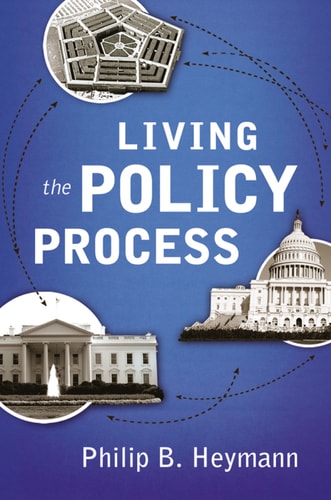
Living the Policy Process
0
0
As an Amazon Associate and affiliate partner, Menrva Books earns from qualifying purchases. Learn more
Author Description
Policymaking in large bureaucracies is hardly a simple process. Even the most respected policymakers have to contend with obstacles that seemingly have little to do with the issue at hand--office politics, work structure, and shifting political environments. Yet learning to manage such complex environments is necessary for good policymaking. In Living the Policy Process, Philip Heymann outlines the complex thought processes of policymakers as they struggle to influence both foreign and domestic policy decisions from within the United States government bureaucracy.Focusing on three critical situations to illuminate the politics of policy choice-the successful attempt to sell missiles to the Mujahideen in Afghanistan in the 1980s; the Iran-Contra scandal; and the FDA's attempt to regulate smoking as well as the efforts to do the same by an outside lobbyist-Heymann dissects the intuitive yet rigorous framework that highly skilled policymakers follow to influence government outcomes. Throughout, he offers detailed accounts of the policy process at work in the Reagan, first Bush, and Clinton administrations, from the cabinet level down to the middle tiers of the federal bureaucracy. Heymann deftly describes the shifting real-world conditions that government officials face as they struggle to shape the policy agenda. Ultimately, Living the Policy Process offers a clear, incisive look at the complex considerations involved from all perspectives, with concrete examples, and enriches the understanding of the overall policy process for students, scholars, and practitioners.
Menrva's Summary
THE THESIS
This book investigates how policymakers navigate the intricate and often obstructive environments of large government bureaucracies to influence policy outcomes. Philip B. Heymann, drawing on his extensive experience and scholarly background, examines the cognitive and strategic frameworks utilized by officials to manage political pressures. By analyzing specific historical case studies, he argues that effective policymaking requires a rigorous, intuitive approach to balancing internal office politics with shifting external political landscapes.
THE SCOPE MAP
What You Will Find
- Analysis of the Reagan, George H.W. Bush, and Clinton administrations
- Case studies including the Afghanistan missile sales, the Iran-Contra scandal, and FDA tobacco regulation
- Examination of policy influence from cabinet-level down to middle-tier bureaucracy
- Frameworks for managing organizational and political constraints
Scope Limits
- Does not provide a comprehensive history of all federal policy initiatives
- Focuses primarily on the United States executive branch rather than legislative or judicial processes
THE AUTHORITY PERSPECTIVE
Experts and practitioners frequently cite this work as a practical resource for understanding the realities of bureaucratic decision-making. Readers often note the academic rigor of the text while appreciating the inclusion of concrete, real-world examples that ground the theoretical framework.
Page Count:
417
Publication Date:
2008-01-01
Publisher:
Oxford University Press
ISBN-10:
0190450533
ISBN-13:
9780190450533
Public Policy
Bureaucracy
Government
Political History
Public Administration
Tobacco
Community Tags
Other Editions(3)

Similar Books