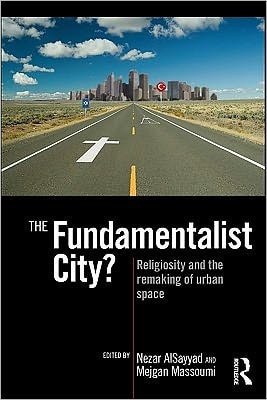
The Fundamentalist City?: Religiosity and the Remaking of Urban Space
0
0
As an Amazon Associate and affiliate partner, Menrva Books earns from qualifying purchases. Learn more
Author Description
The Relationship Between Urbanism And Fundamentalism Is A Very Complex One. This Book Explores How The Dynamics Of Different Forms Of Religious Fundamentalisms Are Produced, Represented, And Practiced In The City. It Attempts To Establish A Relationship Between Two Important Phenomena: The Historic Transition Of The Majority Of The World's Population From A Rural To An Urban Existence; And The Robust Resurgence Of Religion As A Major Force In The Shaping Of Contemporary Life In Many Parts Of The World. Employing A Transnational Interrogation Anchored In Specific Georgraphic Regions, The Contributors To This Volume Explore The Intell Ectual And Practical Challenges Posed By Fundamentalist Groups, Movements, And Organization. They Focus On How Certain Ultra Religious Practices Of Christianity, Hinduism, Islam, And Judaism Have Contributed To The Remaking Of Global Urban Space. Their Work Suggests That It Is A Grave Oversimplification To View Religious Orthodoxies Or Doctrines As The Main Cause Of Urban Terrorism Or Violence. Instead They Argue That Such Phenomena Should Be Understood As A Particular Manifestation Of Modernity's Struggles. Alsayyad And Massoumi's Book Provides Fascinating Reading For Those Interested In Religion And The City, With Thought Provoking Pieces From Experts In Anthropology, Geography, Sociology, Religious Studies, And Urban Studies. --book Jacket.
Menrva's Summary
THE THESIS
This volume investigates the complex intersection between the global resurgence of religious fundamentalism and the rapid transition of human populations into urban environments. Editors Nezar AlSayyad and Mejgan Massoumi curate a collection of interdisciplinary essays that challenge the assumption that religious orthodoxy is the primary driver of urban violence. Instead, the contributors argue that these religious movements represent specific, localized manifestations of broader struggles within modernity, examining how various faiths actively reshape the physical and social fabric of contemporary cities.
THE SCOPE MAP
What You Will Find
- Comparative analysis of Christianity, Hinduism, Islam, and Judaism in urban contexts.
- Case studies focusing on specific geographic regions including Beirut, Ahmedabad, Gaza, and the United States.
- Theoretical frameworks linking religious practice to spatial planning and urban citizenship.
- Interdisciplinary methodologies drawn from anthropology, geography, and sociology to explain the rise of urban fundamentalism.
THE AUTHORITY PERSPECTIVE
Experts in urban studies and religious history identify this volume as a critical resource for understanding the spatial dimensions of modern religious movements. Readers frequently note the academic density of the prose, which provides a rigorous, non-reductive analysis of how faith groups influence the development of global cities.
Page Count:
316
Publication Date:
2011-01-01
Publisher:
Routledge
ISBN-10:
0203844599
ISBN-13:
9780203844595
Religion
Religion and sociology
Religious Aspects
Religion and geography
Sociology
Cities And Towns
Geography
Anthropology
Urban Studies
Community Tags
Similar Books