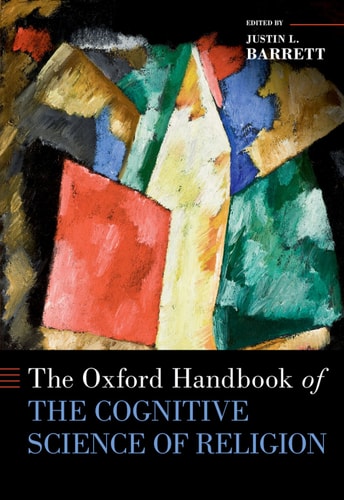
The Oxford Handbook of the Cognitive Science of Religion
0
0
As an Amazon Associate and affiliate partner, Menrva Books earns from qualifying purchases. Learn more
Author Description
Why have religious beliefs and behaviors been nearly universal in human societies? What accounts for similarities and differences across time and across cultures? Could the answer lie in the human brain? Scholars in the cognitive science of religion (CSR) believe that it can- the prevalence of religion is a result of the way our minds work. CSR advances in psychology explain various patterns in religious thought and action. This scientific approach has grown rapidly over the past couple of decades. However, it has often been conflated with related subjects such as evolution and neuroscience. CSR is neither: it straddles the line between cognitive sciences and the study of religion. The Oxford Handbook of the Cognitive Science of Religion directly identifies CSR's unique contributions and clarifies its relationship to neighboring disciplines. With contributions from the field's founders and its rising stars, this volume offers a critical overview of more than 25 years of research. From discussions of human nature to the role of ritual, the contributors offer comprehensive and in-depth analysis of key questions in CSR. Readers will have a variety of entry points to truly grasp where CSR has been, where it is, and where it might go.
Menrva's Summary
THE THESIS
This volume investigates the cognitive mechanisms underlying religious belief and behavior to determine why such phenomena are nearly universal across human societies. The editor, John G. Stackhouse Jr., compiles contributions from foundational scholars and emerging researchers to define the boundaries of the cognitive science of religion (CSR). The text argues that religious prevalence is a direct byproduct of human cognitive architecture, distinguishing this field from evolutionary biology and neuroscience while situating it as a bridge between cognitive science and religious studies.
THE SCOPE MAP
What You Will Find
- A comprehensive overview of 25 years of empirical research in CSR.
- Analysis of the relationship between cognitive psychology and religious ritual.
- Theoretical frameworks explaining cross-cultural patterns in religious thought.
Scope Limits
- The text does not provide a theological defense or critique of religious truth claims.
- It does not focus on the historical evolution of specific religious institutions, but rather the cognitive processes that facilitate them.
THE AUTHORITY PERSPECTIVE
Experts recognize this volume as a definitive reference for understanding the interdisciplinary foundations of the cognitive science of religion. Readers frequently note the academic density of the prose, making it a primary resource for scholars and advanced students in the field.
Page Count:
456
Publication Date:
2022-01-01
Publisher:
Oxford University Press
ISBN-10:
0190693371
ISBN-13:
9780190693374
Religion
Psychology
Medical
Allied Health
Anthropology
Sociology
General Anthropology
Community Tags
Similar Books