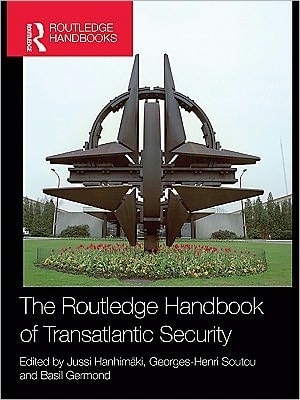
The Routledge handbook of transatlantic security
0
0
As an Amazon Associate and affiliate partner, Menrva Books earns from qualifying purchases. Learn more
Author Description
This book provides readers with the tools to understand the evolution of transatlantic security from the Cold War era to the early twenty-first century. The essays in this book cover a broad range of historical and contemporary themes, including the founding of NATO; the impact of the Korean War; the role of nuclear (non-)proliferation; perspectives of individual countries; the impact of culture; identity and representation in shaping post-Cold War transatlantic relations; institutional issues, particularly EU-NATO relations; the Middle East; and the legacy of the Cold War, notably tensions with Russia.
Menrva's Summary
THE THESIS
This volume investigates the complex evolution of transatlantic security architectures and geopolitical dynamics from the onset of the Cold War through the early twenty-first century. Edited by Jussi Hanhimäki and featuring contributions from a range of international scholars, the text utilizes primary historical documentation and diplomatic analysis to examine how institutional frameworks, national identities, and shifting global power structures have defined the relationship between the United States and its European partners. The collection argues that transatlantic security is not a static condition but a continuous process of negotiation, adaptation, and internal tension.
THE SCOPE MAP
What You Will Find
- Historical analysis of the founding of NATO and its transformation during the Korean War.
- Examination of nuclear proliferation policies and the doctrine of massive retaliation.
- Case studies on individual national perspectives, including France, West Germany, and the United States.
- Institutional assessments of the evolving relationship between the European Union and NATO.
- Discussions on the impact of regional crises in the Middle East and Iran on transatlantic stability.
THE AUTHORITY PERSPECTIVE
Experts and academic reviewers identify this handbook as a comprehensive reference for students and researchers of twentieth-century international relations. Readers frequently note the academic density of the prose, which provides a rigorous examination of diplomatic history and security policy.
Page Count:
318
Publication Date:
2010-01-01
Publisher:
Routledge
ISBN-10:
0203846699
ISBN-13:
9780203846698
History
European Union
North Atlantic Treaty Organization
United States
National security
International relations
Military History
Security Studies
Community Tags
Similar Books