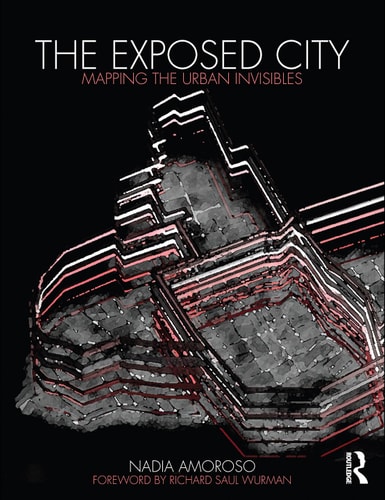
The Exposed City: Mapping the Urban Invisibles
0
0
As an Amazon Associate and affiliate partner, Menrva Books earns from qualifying purchases. Learn more
Author Description
There Is A Vast Amount Of Information About A City Which Is Invisible To The Human Eye: Crime Levels, Transportation Patterns, Cell Phone Use And Air Quality To Name Just A Few. If A City Was Able To Be Defined By These Characteristics, What Form Would It Take? How Could It Be Mapped? Nadia Amoroso Tackles These Questions By Taking Statistical Urban Data And Exploring How They Could Be Transformed Into Innovative New Maps. The Unseen Elements Of The City Are Examined In Groundbreaking Images Throughout The Book, Which Are Complemented By Interviews With Winy Maas And James Corner, Comments By Richard Saul Wurman, And Sections By The Senseable City Lab Group And Mark Aubin, Co-founder Of Google Earth--jacket. Essays: Map Or Drawing: The Visual Expressions Of Hugh Ferriss; Graphic Integrity And Mapping Complexity: The Works Of Lynch, Wurman And Tufte; The Datascapes: The Works Of Mvrdv; The Map-art: The Works Of James Corner -- Visuals: Drawings: The Map-landscapes; Afterword: Look Ahead Comments By Senseable City Lab And Google Earth Inc. Nadia Amoroso. Includes Bibliographical References And Index.
Menrva's Summary
THE THESIS
This book investigates how invisible urban data—ranging from crime statistics to transportation patterns—can be translated into innovative visual maps to redefine our understanding of the modern city. Nadia Amoroso, an expert in landscape architecture and urban design, utilizes a multidisciplinary framework to bridge the gap between raw statistical information and artistic representation. By examining the intersection of data science and cartography, the author argues that the visual expression of urban complexity is essential for future city planning and design. The text synthesizes theoretical essays with practical examples to demonstrate how data can be transformed into meaningful spatial narratives.
THE SCOPE MAP
What You Will Find
- Analysis of urban data sets including air quality, cell phone usage, and transportation flow.
- Methodologies for transforming statistical information into visual maps and graphic expressions.
- Case studies and visual examples from prominent figures like Winy Maas, James Corner, and the Senseable City Lab.
- Historical context on the evolution of mapping, referencing the works of Kevin Lynch, Richard Saul Wurman, and Edward Tufte.
THE AUTHORITY PERSPECTIVE
Experts and urban planning professionals frequently cite this work as a significant resource for understanding the aesthetic and functional potential of data visualization in architecture. Readers note that the book serves as a bridge between academic theory and practical design application, making it a useful reference for students and practitioners alike.
Page Count:
176
Publication Date:
2010-01-01
Publisher:
Routledge
ISBN-10:
020385537X
ISBN-13:
9780203855379
Architecture
Cartography
urban planning
Technology
Geography
Community Tags
Similar Books