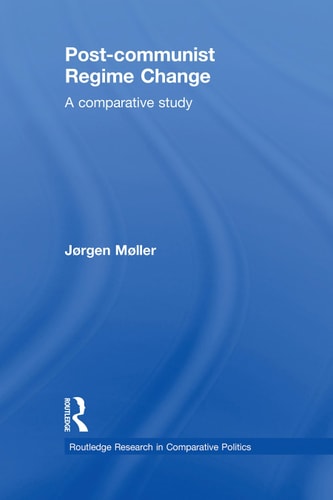
Post-Communist Regime Change: A Comparative Study
0
0
As an Amazon Associate and affiliate partner, Menrva Books earns from qualifying purchases. Learn more
Author Description
This book seeks to explain the advent of this post-communist tripartition and elucidate and explain the political pathways of 24 post-communist countries in the period 1990-2005.
Menrva's Summary
THE THESIS
This book investigates the factors that led to the political tripartition of post-communist states and the divergent paths these nations took following the collapse of the Soviet bloc. Jørgen Møller, a scholar of comparative politics, utilizes a rigorous analytical framework to examine the political trajectories of 24 countries between 1990 and 2005. By focusing on institutional development and regime transition, the author provides a structured explanation for why some nations consolidated democracy while others regressed into authoritarianism or remained in hybrid states.
THE SCOPE MAP
What You Will Find
- A comparative analysis of 24 post-communist countries across Europe and Eurasia.
- A longitudinal study covering the critical transition period from 1990 to 2005.
- A theoretical framework categorizing political outcomes into a distinct tripartition.
- Empirical evidence examining the impact of initial institutional choices on long-term regime stability.
THE AUTHORITY PERSPECTIVE
Experts in comparative politics recognize this work as a significant contribution to the study of regime change and institutional design in post-communist contexts. Readers frequently note the academic density of the prose and the systematic nature of the author's comparative methodology.
Page Count:
177
Publication Date:
2009-01-01
Publisher:
Routledge
ISBN-10:
0203878078
ISBN-13:
9780203878071
History
Government
Comparative Politics
Post-communism
Community Tags
Similar Books