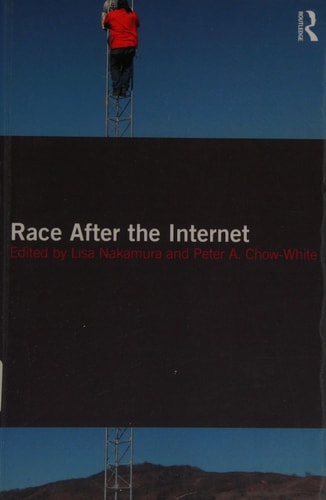
Race After the Internet
0
0
As an Amazon Associate and affiliate partner, Menrva Books earns from qualifying purchases. Learn more
Author Description
Digital media technologies like the Internet create and host the social networks, virtual worlds, online communities, and media texts where it was once thought that we would all be the same, anonymous users with infinite powers. Instead, the essays in Race After the Internet show us that the Internet and other computer-based technologies are complex topographies of power and privilege, made up of walled gardens, new (plat)forms of economic and technological exclusion, and both new and old styles of race as code, interaction, and image. Investigating how racialization and racism are changing in web 2.0 digital media culture, Race After the Internet contains interdisciplinary essays on the shifting terrain of racial identity and its connections to digital media, including Facebook and MySpace, YouTube and viral video, WiFi infrastructure, the One Laptop Per Child (OLPC) program, genetic ancestry testing, DNA databases in health and law enforcement, and popular online games like World of Warcraft. Ultimately, the collection broadens the definition of the "digital divide" in order to convey a more nuanced understanding of usage, meaning, participation, and production of digital media technology in light of racial inequality.
Menrva's Summary
THE THESIS
This collection investigates how digital media technologies and the Internet function as complex topographies of power that reinforce or transform racial identity and inequality. Edited by Lisa Nakamura and Peter A. Chow-White, the volume brings together interdisciplinary scholars to analyze how racialization persists in Web 2.0 environments. The authors argue that the digital landscape is not a neutral space of anonymity, but rather a site where historical racial hierarchies are encoded into software, infrastructure, and social platforms.
THE SCOPE MAP
What You Will Find
- Analysis of racial identity formation within social networks like Facebook and MySpace.
- Examination of digital divide issues regarding global infrastructure and the One Laptop Per Child program.
- Case studies on racial representation in virtual worlds such as World of Warcraft.
- Investigation into the intersection of biotechnology, DNA databases, and modern racial profiling.
THE AUTHORITY PERSPECTIVE
Scholars and critics recognize this work as a foundational text for understanding the intersection of race and digital culture. Readers frequently note the academic rigor of the essays, which provide a critical framework for analyzing how technological systems perpetuate social stratification.
Page Count:
343
Publication Date:
2011-01-01
Publisher:
Routledge
ISBN-10:
0203875060
ISBN-13:
9780203875063
Science
Social Science
Race Studies
Internet
Race Relations
Digital Media
Technology
Sociology
Social Aspects
Race
Community Tags
Other Editions(3)

Similar Books