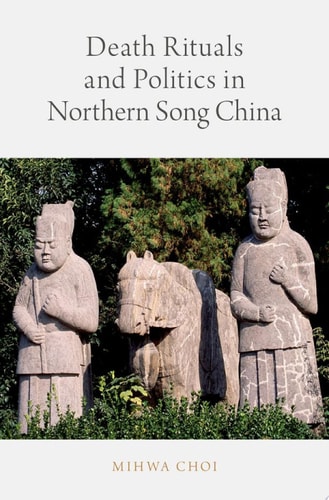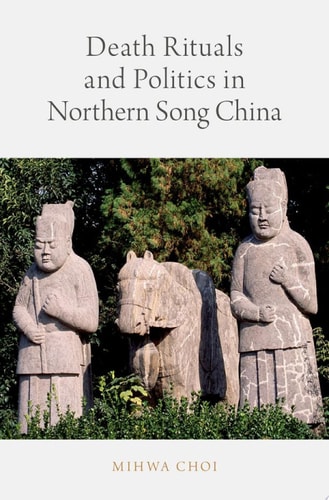
Death Rituals and Politics in Northern Song China
0
0
As an Amazon Associate and affiliate partner, Menrva Books earns from qualifying purchases. Learn more
Author Description
In Traditional China, A Funeral And The Accompanying Death Rituals Represented A Critical Moment For The Immediate Family Of The Deceased To Show Their Filial Piety, A Core Value Of The Society. At The Same Time, Death Rituals Were Social Occasions, And Channels For The Outward Demonstration Of Belief In A Religiously Pluralistic Society. During The Northern Song Period, However, Death Rituals Increasingly Became An Arena For Political Contention As Attempts Were Made To Transform These Practices From A Private Matter Into One Subject To State Control. Death Rituals And Politics In Northern Song China Examines How Political Confrontations Over The Proper Conduct Of Death Rituals During Northern Song Dynasty (960-1127) Inaugurated A Period Of Confucian Revivalism. Mihwa Choi Interprets Northern Song Court Politics, Family Ritual Practices, Burial Practices, And The Popular Imagination Of The Afterlife As Sites Of Contest Between Groups Of Varying Social Status, Political Vision, And Religious Belief. She Demonstrates That The Oversight Of Ritual Affairs By Scholar-officials Helped Them Gain The Political Upper Hand They Sought, And, More Broadly, Fostered A Revival Of Confucianism As The Dominant Value System Of Chinese Society In The Period That Followed.
Menrva's Summary
THE THESIS
How did the politicization of death rituals during the Northern Song Dynasty facilitate the revival of Confucianism as the dominant social and political value system? Mihwa Choi, a scholar of Chinese history, utilizes court records, burial practices, and contemporary narratives to analyze the shift in ritual oversight. She argues that scholar-officials leveraged the regulation of funeral practices to consolidate political authority and reshape the social landscape of the 960-1127 period.
THE SCOPE MAP
What You Will Find
- Analysis of Northern Song court politics and state-controlled ritual discourse.
- Examination of the transition from private family rites to state-regulated practices.
- Investigation into the popular imagination of the afterlife and supernatural narratives.
- Case studies on burial practices as sites of social and political contestation.
Scope Limits
- The study is strictly confined to the Northern Song period (960-1127) and does not provide an exhaustive history of Chinese funeral rites across all dynasties.
THE AUTHORITY PERSPECTIVE
Scholars recognize this work as a specialized contribution to the study of Song Dynasty political culture and the institutionalization of Confucianism. Readers frequently note the academic density of the prose, which is intended for researchers and students of Chinese history and religious studies.
Page Count:
248
Publication Date:
2017-11-02
Publisher:
Oxford University Press
ISBN-10:
019045976X
ISBN-13:
9780190459765
History
Confucianism
Funeral Rites
Chinese History
Political History
Sociology of Religion
China
Death & dying