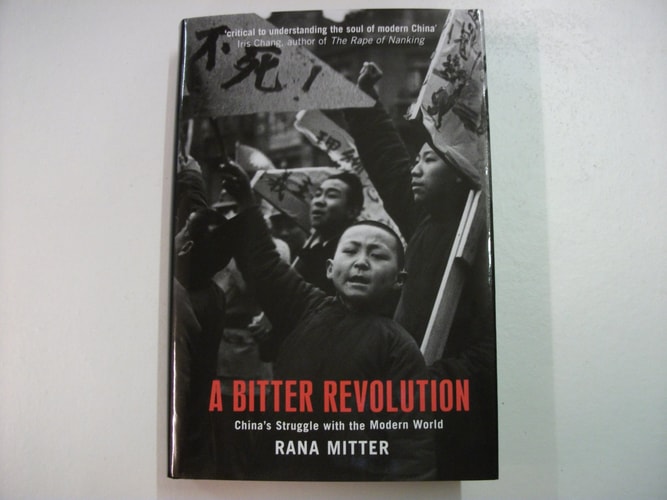
A Bitter Revolution: China's Struggle with the Modern World
0
0
As an Amazon Associate and affiliate partner, Menrva Books earns from qualifying purchases. Learn more
Author Description
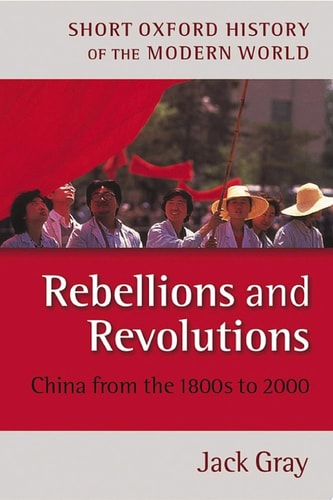
China today is poised to play a key role on the world stage, but in the early twentieth century the situation was very different. In this powerful new look at modern China, Rana Mitter goes back to a pivotal moment in Chinese history to uncover the origins of the painful transition from pre-modern to modern world.Mitter identifies May 4, 1919, as the defining moment of China's twentieth-century history. On that day, outrage over the Paris peace conference triggered a vast student protest that led in turn to "the May Fourth Movement." Just seven years before, the 2,000-year-old imperial system had collapsed. Now a new group of urban, modernizing thinkers began to reject Confucianism and traditional culture in general as hindrances in the fight against imperialism, warlordism, and the oppression of women and the poor. Forward-looking, individualistic, embracing youth, this "New Culture movement" made a lasting impact on the critical decades that followed: the 1940s, with the war against Japan and the civil war between the Nationalist Party and the Communists; the 1960s, with the bizarre, seemingly anarchic world of Mao Zedong's Cultural Revolution; and the 1980s, with the rise of a semi-market economy against the backdrop of continued single-party rule and growing inequality. Throughout each of these dramatically different eras, the May 4 themes persisted, from the insanity of the Cultural Revolution to the recent romance with space-age technology.China, Mitter concludes, still seems to be in search of a new narrative about what the country is, and what it should become. And May 4 remains a touchstone in that search.
Menrva's Summary
THE THESIS
How did the May Fourth Movement of 1919 serve as the foundational catalyst for China's turbulent transition into the modern era? Rana Mitter, a professor of the history and politics of modern China, examines the intellectual and political shifts that occurred following the collapse of the imperial system. By analyzing the rejection of Confucianism and the rise of new, individualistic ideologies, Mitter argues that the tensions and aspirations born in 1919 continue to shape the Chinese state's identity and its ongoing search for a coherent national narrative.
THE SCOPE MAP
What You Will Find
- Analysis of the May Fourth Movement and its long-term influence on 20th-century Chinese politics.
- Examination of the transition from imperial rule to the rise of the Nationalist and Communist parties.
- Historical context regarding the war against Japan, the Cultural Revolution, and the economic reforms of the 1980s.
- Exploration of the intellectual shift away from traditional Confucian values toward modernization.
Scope Limits
- The text focuses primarily on intellectual and political history rather than a comprehensive military or economic history of the period.
- It does not provide an exhaustive account of post-1990s developments in contemporary China.
THE AUTHORITY PERSPECTIVE
Historians and scholars of East Asian studies frequently cite this work for its clear synthesis of complex intellectual movements and their practical political consequences. Readers often note the accessible prose style, which makes the dense historical subject matter approachable for those without a specialized background in Chinese history.
Page Count:
384
Publication Date:
2004-07-01
Publisher:
Oxford University Press
ISBN-10:
0192803417
ISBN-13:
9780192803412
History
Modern History
Politics & Government
China
Asian History
Chinese History