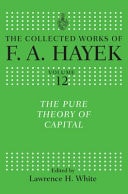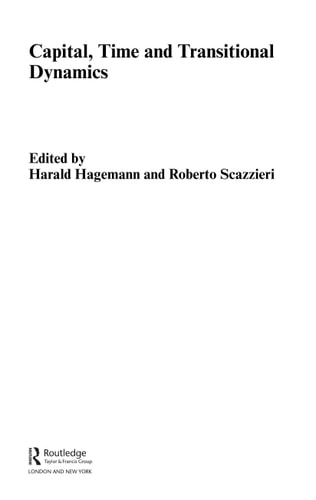
Capital, Time, and Transitional Dynamics
0
0
As an Amazon Associate and affiliate partner, Menrva Books earns from qualifying purchases. Learn more
Author Description
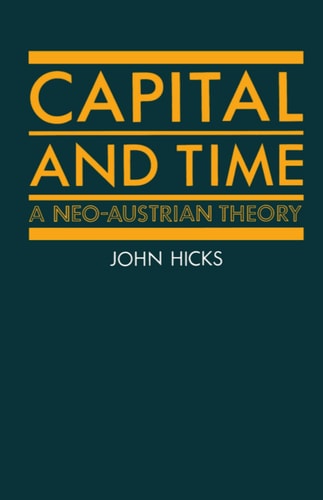
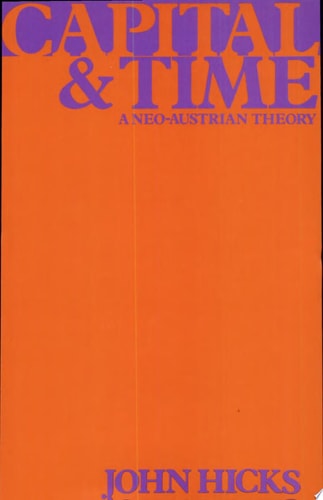
In The Words Of Robert M. Solow Traverse Analysis Is The Easiest Part Of Skiing, But The Hardest Part Of Economics. The Aim Of This Volume Is To Assess The State And Scope Of Modern Traverse Analysis As It Had Been Initiated By John Hicks In His Pioneering Contribution Capital And Time (1973). The Analysis Of An Economy Which Originally Had Been In A Growth Equilibrium Which Was Disturbed By Technical Progress Is One Of The Most Challenging Problems In Economics. This Book Takes Hicks' Work As The Point Of Departure For Theoretical Work On The Macroeconomic Theory Of Capital Dynamics Along Transition Non-steady State Paths The Original Contributions In This Volume Explore The Manifold Theoretical Roots Of Traverse Analysis In Classical And Post-classical Literature, Its Features As A Specific Method Of Economic Dynamics, And Its Applications In A Variety Of Fields From Monetary Economics To Development And International Economics. The Essays Thereby Focus On The Ways Ahead From Capital And Time That Have Been Suggested And Actively Pursued By A Number Of Scholars In Recent Years. Its Central Theme Is The Role Of Capital Structures As Critical Factors In Determining The Actual Dynamics Of Any Given Economic System. This Volume Is Inspired By The Belief That This State Of Affairs Is Not A Satisfactory One, And Outlines A New Agenda For Capital Theory. Contributors Include Edwin Burmeister, Jean-luc Gaffard And Heinz Kurz.
Menrva's Summary
THE THESIS
This volume investigates the theoretical validity and practical application of traverse analysis in understanding macroeconomic dynamics during periods of structural transition. The editors, Harald Hagemann and Roberto Scazzieri, compile a series of scholarly essays that evaluate John Hicks's seminal work, Capital and Time, as a framework for analyzing economies moving away from growth equilibrium due to technical progress. By synthesizing classical and post-classical economic thought, the contributors propose a new research agenda for capital theory that emphasizes the role of capital structures in determining systemic economic behavior.
THE SCOPE MAP
What You Will Find
- Theoretical roots of traverse analysis within classical and post-classical literature.
- Methodological frameworks for analyzing non-steady state economic paths.
- Applications of traverse analysis in monetary, development, and international economics.
- Critical evaluations of Neo-Austrian capital theory and its evolution from the work of Böhm-Bawerk.
THE AUTHORITY PERSPECTIVE
Experts recognize this volume as a significant contribution to the ongoing discourse on capital dynamics and the legacy of John Hicks. Readers frequently note the academic density of the prose, identifying it as a specialized resource for advanced students and researchers in economic theory.
Page Count:
0
Publication Date:
2008-01-01
Publisher:
Routledge
ISBN-10:
0203888707
ISBN-13:
9780203888704
Economics
Economic Theory
Macroeconomics
Capital
Economic History
Community Tags
Similar Books