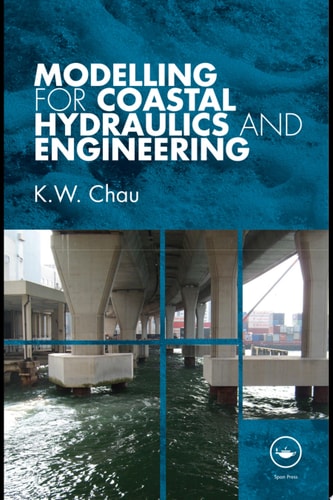
Modelling for Coastal Hydraulics and Engineering
0
0
As an Amazon Associate and affiliate partner, Menrva Books earns from qualifying purchases. Learn more
Author Description
Mechanistic models are often employed to simulate processes in coastal environments. However, these predictive tools are highly specialized, involve certain assumptions and limitations, and can be manipulated only by experienced engineers who have a thorough understanding of the underlying principles. This results in significant constraints on their manipulation as well as large gaps in understanding and expectations between the developers and users of a model. Recent advancements in soft computing technologies make it possible to integrate machine learning capabilities into numerical modelling systems in order to bridge the gaps and lessen the demands on human experts. This book reviews the state-of-the-art in conventional coastal modelling as well as in the increasingly popular integration of various artificial intelligence technologies into coastal modelling. Conventional hydrodynamic and water quality modelling techniques comprise finite difference and finite element methods. The novel algorithms and methods include knowledge-based systems, genetic algorithms, artificial neural networks, and fuzzy inference systems. Different soft computing methods contribute towards accurate and reliable prediction of coastal processes. Combining these techniques and harnessing their benefits has the potential to make extremely powerful modelling tools.
Menrva's Summary
THE THESIS
This book investigates the integration of soft computing and artificial intelligence technologies to overcome the limitations and specialized demands of traditional mechanistic coastal modelling. Author K. W. Chau, an expert in the field, evaluates the transition from conventional hydrodynamic techniques to hybrid systems. By synthesizing finite difference and finite element methods with modern machine learning, the text provides a framework for more accessible and reliable predictive modelling in coastal environments.
THE SCOPE MAP
What You Will Find
- Conventional hydrodynamic and water quality modelling techniques including finite difference and finite element methods.
- Integration of artificial intelligence technologies such as knowledge-based systems, genetic algorithms, and artificial neural networks.
- Comparative analysis of soft computing methods for the prediction of coastal processes.
- Methodologies for bridging the gap between model developers and end-user engineers.
THE AUTHORITY PERSPECTIVE
Experts recognize this text as a technical bridge between classical fluid dynamics and modern computational intelligence. Readers frequently note the high level of technical density, making it a specialized resource for practitioners and researchers in coastal engineering.
Page Count:
240
Publication Date:
2010-02-27
Publisher:
Routledge
ISBN-10:
0203884760
ISBN-13:
9780203884768
Engineering
Coastal Engineering
Hydraulics
Machine Learning
Coasts
Coast Changes
Community Tags
Other Editions(4)

Similar Books