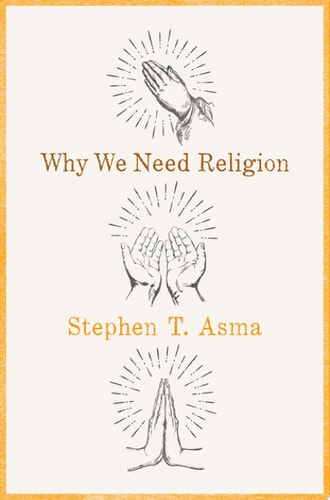
Why We Need Religion
0
0
As an Amazon Associate and affiliate partner, Menrva Books earns from qualifying purchases. Learn more
Author Description
How We Feel Is As Vital To Our Survival As How We Think. This Claim, Based On The Premise That Emotions Are Largely Adaptive, Serves As The Organizing Theme Of Why We Need Religion. This Book Is A Novel Pathway In A Well-trodden Field Of Religious Studies And Philosophy Of Religion. Stephen Asma Argues That, Like Art, Religion Has Direct Access To Our Emotional Lives In Ways That Science Does Not. Yes, Science Can Give Us Emotional Feelings Of Wonder And The Sublime--we Can Feel The Sacred Depths Of Nature--but There Are Many Forms Of Human Suffering And Vulnerability That Are Beyond The Reach Of Help From Science. Different Emotional Stresses Require Different Kinds Of Rescue. Unlike Secular Authors Who Praise Religion's Ethical And Civilizing Function, Asma Argues That Its Core Value Lies In Its Emotionally Therapeutic Power. No Theorist Of Religion Has Failed To Notice The Importance Of Emotions In Spiritual And Ritual Life, But Truly Systematic Research Has Only Recently Delivered Concrete Data On The Neurology, Psychology, And Anthropology Of The Emotional Systems. This Very Recent Affective Turn Has Begun To Map Out A Powerful Territory Of Embodied Cognition. Why We Need Religion Incorporates New Data From These Affective Sciences Into The Philosophy Of Religion. It Goes On To Describe The Way In Which Religion Manages Those Systems--rage, Play, Lust, Care, Grief, And So On. Finally, It Argues That Religion Is Still The Best Cultural Apparatus For Doing This Adaptive Work. In Short, The Book Is A Darwinian Defense Of Religious Emotions And The Cultural Systems That Manage Them.
Menrva's Summary
THE THESIS
The central question investigated is whether religion serves as a necessary, adaptive cultural apparatus for managing human emotional systems. Stephen T. Asma, a professor of philosophy, utilizes a framework grounded in the affective sciences—specifically neurology, psychology, and anthropology—to argue that religion functions primarily as emotional therapy. He posits that while science provides intellectual understanding, religion offers unique mechanisms for addressing human suffering and vulnerability that science cannot reach.
THE SCOPE MAP
What You Will Find
- An analysis of the neurological and psychological foundations of human emotional systems like rage, play, lust, care, and grief.
- A Darwinian defense of religious ritual as a tool for emotional regulation.
- A comparative study between the emotional limitations of scientific inquiry and the therapeutic capacity of spiritual practice.
Scope Limits
- The text does not focus on the theological truth claims of specific religions or the ethical/civilizing functions often cited by secular critics.
THE AUTHORITY PERSPECTIVE
Scholars and readers frequently note the interdisciplinary nature of the text, which bridges the gap between evolutionary biology and the philosophy of religion. Experts highlight this as a significant contribution to the 'affective turn' in religious studies, providing a clear, systematic argument for the persistence of religious practice in a secular age.
Page Count:
288
Publication Date:
2018-01-01
Publisher:
Oxford University Press
ISBN-10:
0190469684
ISBN-13:
9780190469689
Psychology
Philosophy
Religion
Neuroscience
Anthropology
Evolutionary Biology
Community Tags
Similar Books