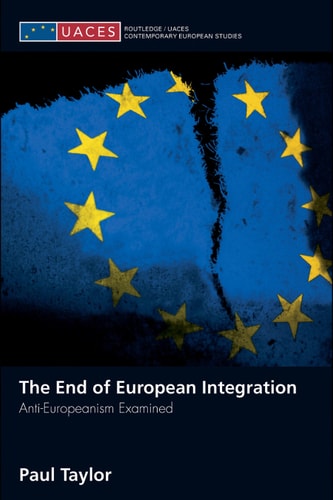
The End of European Integration: Anti-Europeanism Examined
0
0
As an Amazon Associate and affiliate partner, Menrva Books earns from qualifying purchases. Learn more
Author Description
This book provides an innovative examination of the European Union as it departs from its path of integration. Indeed, so far has it departed that it could be described as having entered a new reality. The original reality was that captured in the evocative phrase in its founding agreement, the Treaty of Rome, that it should be an ever-closer union of peoples. Largely that was the path followed until the 1990s, but by the early twenty-first century there have been signs that it is turning into an ordinary international organization in which there is little overriding sense of purpose. This book discusses the indications of this development and explains why it happened only a decade or so after a peak of popular enthusiasm in the early 1990s. The question was whether the EU would become less important for the member states, as seemed to be the case for the British, or whether the German pattern, in which the EU remained important, would prevail. This book concludes that the former is more likely in part because of problems with the policies of the European Union and its conduct, but more specifically because of the current prevailing political culture in Western Europe. Paul Taylor warns that the current problems are underestimated and that there is the risk of casually throwing away the considerable achievements of the integration process. The End of European Integration will be of interest to all those with an interest in European integration, whether for or against. It will also interest students of European studies, European politics, and politics and international relations in general.
Menrva's Summary
THE THESIS
Does the European Union represent a failing project of integration, and what factors have contributed to its shift toward becoming a standard international organization? Paul Graham Taylor, a scholar of European politics, utilizes historical analysis and political theory to argue that the EU has moved away from its foundational goal of an 'ever-closer union.' He examines the divergence between British and German perspectives on the union's importance, ultimately positing that a shift in Western European political culture is undermining the integration process. The text serves as a critical warning regarding the potential loss of post-war institutional achievements.
THE SCOPE MAP
What You Will Find
- Historical analysis of the European Union from the Treaty of Rome through the early twenty-first century.
- Comparative study of member state attitudes, specifically contrasting British and German approaches to integration.
- Examination of the impact of prevailing political culture on institutional longevity.
- Assessment of policy failures and administrative conduct within the European Union.
THE AUTHORITY PERSPECTIVE
Experts and students of international relations frequently cite this work for its critical perspective on the trajectory of European institutions. Readers often note the academic density of the prose, which provides a rigorous framework for understanding the complexities of modern European politics.
Page Count:
192
Publication Date:
2007-01-01
Publisher:
Routledge
ISBN-10:
0203935683
ISBN-13:
9780203935682
Politics
History
Europe
European Union
International relations
Government relations
Sociology
European federation
Community Tags
Similar Books