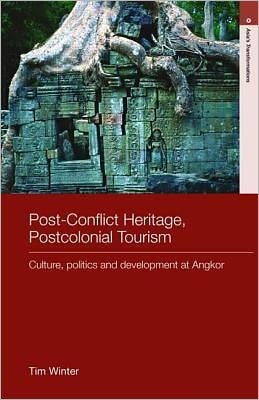
Post-conflict Heritage, Postcolonial Tourism: Culture, Politics and Development at Angkor
0
0
As an Amazon Associate and affiliate partner, Menrva Books earns from qualifying purchases. Learn more
Author Description
Angkor, Cambodia's only World Heritage site, is enduring one of the most crucial, turbulent periods in its twelve hundred year history. Given Cambodia's need to restore its shattered social and physical infrastructures after decades of violent conflict, and with tourism to Angkor increasing by a staggering 10,000 per cent in just over a decade, the site has become an intense focal point of competing agendas. Angkor's immense historical importance, along with its global prestige, has led to an unprecedented influx of aid, with over twenty countries together donating millions of dollars for conservation and research. For the Royal Government however, Angkor has become a cash-cow of development. Post-conflict Heritage, Postcolonial Tourism critically examines this situation and locates Angkor within the broader contexts of post-conflict reconstruction, nation building, and socio-economic rehabilitation. Based on two years of fieldwork, the book explores culture, development, the politics of space, and the relationship between consumption, memory and identity to reveal the aspirations and tensions, anxieties and paradoxical agendas, which form around a heritage tourism landscape in a post-conflict, postcolonial society.
Menrva's Summary
THE THESIS
This book investigates the complex intersection of heritage conservation, post-conflict reconstruction, and the rapid expansion of tourism at the Angkor archaeological site in Cambodia. Tim Winter, a scholar specializing in heritage and development, utilizes two years of intensive fieldwork to analyze how the site functions as a focal point for competing national and international agendas. The work argues that Angkor serves as a microcosm for the tensions inherent in nation-building, where the preservation of historical identity often clashes with the economic imperatives of a post-colonial, post-conflict state.
THE SCOPE MAP
What You Will Find
- Analysis of the socio-economic impact of a 10,000 percent increase in tourism over a decade.
- Examination of the politics of space and the transformation of historical landscapes into commercial touristscapes.
- Qualitative data derived from two years of ethnographic fieldwork and site observation.
- Exploration of the relationship between international aid, conservation policies, and domestic development goals.
THE AUTHORITY PERSPECTIVE
Scholars in the fields of heritage studies and Southeast Asian development recognize this text as a critical examination of the paradoxes surrounding World Heritage sites in developing nations. Readers frequently note the academic rigor and the depth of the author's analysis regarding the commodification of history.
Page Count:
170
Publication Date:
2007-01-01
Publisher:
Routledge
ISBN-10:
0203946383
ISBN-13:
9780203946381
History
Tourism
Sociology
Community Tags
Similar Books