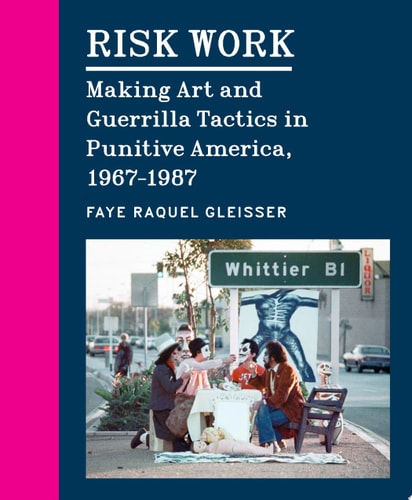
Risk Work: Making Art and Guerrilla Tactics in Punitive America, 1967–1987
0
0
As an Amazon Associate and affiliate partner, Menrva Books earns from qualifying purchases. Learn more
Author Description
Holding a TV talk show host hostage. Staging a faux scene of gang war violence. Loitering. Surviving outdoors for a year. Crawling. Wheat-pasting posters. Occupying a traffic island. These actions served as the basis of experimental artworks, often described as "guerrilla," that were staged for unsuspecting audiences in the US during the 1970s and 1980s--a period when politicians and law enforcement framed anticolonial interventions and urban rebellions waged by "guerrilla fighters" as national security threats, and lawmakers expanded policing budgets while deepening the consequences of anti-riot, anti-loitering, and anti-poverty laws. Focusing on instances of arrest or near-arrest in performance and conceptual art by artists Chris Burden, Adrian Piper, Tehching Hsieh, Pope.L, and Jean Toche, and art groups, the Guerrilla Girls, Asco, and PESTS, Gleisser challenges long-standing misconceptions surrounding guerrilla art in American society. Rather than romanticize artists' individual agency, or treat police presence as a given, Gleisser argues that artists' tactical work exposes the racialized, sexualized, and gendered politics of risk-taking mired in the country's punitive turn. Drawing on art history, Black studies, performance studies, and prison studies, Gleisser provides close analyses of art staged in charged urban sites, revealing how artists' "risk work" negotiates differing vulnerabilities to state-sanctioned violence, and exposes the complex relationship between policing, state power, and conttemporary art--Provided by publisher.
Menrva's Summary
THE THESIS
This book investigates the intersection of experimental art, risk-taking, and punitive state power in America between 1967 and 1987. Faye Raquel Gleisser examines how artists employed
THE SCOPE MAP
- Analysis of experimental artworks described as "guerrilla" tactics staged in public spaces.
- Focus on artists and art groups including Chris Burden, Adrian Piper, Tehching Hsieh, Pope.L, Jean Toche, Guerrilla Girls, Asco, and PESTS.
- Examination of the political climate of the 1970s and 1980s, characterized by the framing of anticolonial interventions and urban rebellions as national security threats.
- Exploration of how artists' risk-taking negotiated racialized, sexualized, and gendered vulnerabilities to state-sanctioned violence.
- Close analyses of art staged in charged urban sites, revealing the complex relationship between policing, state power, and contemporary art.
- Drawing on art history, Black studies, performance studies, and prison studies.
THE AUTHORITY PERSPECTIVE
The book challenges long-standing misconceptions surrounding guerrilla art in American society by moving beyond romanticizing individual artistic agency or treating police presence as a given. Gleisser argues that artists' tactical work exposes the racialized, sexualized, and gendered politics of risk-taking within the country's punitive turn. By analyzing art staged in charged urban sites, the work reveals how artists' "risk work" negotiates differing vulnerabilities to state-sanctioned violence. It ultimately exposes the complex relationship between policing, state power, and contemporary art.
Page Count:
264
Publication Date:
2023-10-17
Publisher:
University of Chicago Press
ISBN-10:
0226826465
ISBN-13:
9780226826462
Art
History
Non-Fiction
American Studies
Activism
Performance art
Art History
Social Commentary
Community Tags
Similar Books