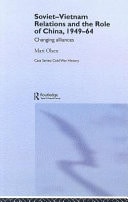
Soviet-Vietnam Relations and the Role of China 1949-64: Changing Alliances
0
0
As an Amazon Associate and affiliate partner, Menrva Books earns from qualifying purchases. Learn more
Author Description
This New Book Analyzes How The Soviet Leadership Evaluated Developments In Soviet-vietnamese Relations In The Years From 1949 To 1964. Focusing On How Soviet Leaders Actually Perceived China’s Role In Vietnam Relative To The Soviet Role, It Shows How These Perceptions Influenced The Soviet-vietnamese Relationship. It Also Explains How And When Moscow’s Enthusiasm For The Active Chinese Role In Vietnam Came To An End – Or, In Other Words, From What Point Was Beijing’s Involvement In Vietnam Perceived As A Liability Rather Than An Asset, In The Strategies Of Soviet Policy Makers. This Book Is An Excellent Resource For All Students With An Interest In Soviet-vietnamese Relations And Of Strategic Studies And International Relations In General.
Menrva's Summary
THE THESIS
This book investigates how Soviet leadership perceptions of China’s involvement in Vietnam shaped the trajectory of Soviet-Vietnamese diplomatic relations between 1949 and 1964. Mari Olsen utilizes archival research and strategic analysis to examine the shifting geopolitical calculations within Moscow. The work argues that the transition of Beijing’s role from a strategic asset to a perceived liability was a primary driver in the evolution of Soviet foreign policy toward Southeast Asia during this period.
THE SCOPE MAP
What You Will Find
- A detailed analysis of Soviet diplomatic strategy regarding Vietnam from 1949 to 1964.
- Examination of the ideological and strategic friction between Moscow and Beijing.
- Primary source-based evidence regarding the internal decision-making processes of Soviet policy makers.
- A framework for understanding how regional alliances were influenced by the broader Sino-Soviet split.
THE AUTHORITY PERSPECTIVE
Scholars of Cold War history identify this work as a significant contribution to understanding the complexities of the triangular relationship between the Soviet Union, China, and Vietnam. The text is frequently cited for its rigorous use of archival evidence and its clear articulation of the strategic shifts that defined mid-century international relations.
Page Count:
224
Publication Date:
2007-01-01
Publisher:
Taylor & Francis Group
ISBN-10:
0203963938
ISBN-13:
9780203963937
History
Cold War
Asian History
International relations