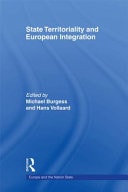
State Territoriality And European Integration
0
0
As an Amazon Associate and affiliate partner, Menrva Books earns from qualifying purchases. Learn more
Author Description
The European nation state is now placed between the interconnected processes of globalization and European integration. This new book examines these evolving relationships, showing how the conventional territorial basis of the state is being reappraised. Bringing together leading thinkers on the nation state, this volume tackles key questions about how we should conceptualize and discuss the political significance of territory in today’s world. For example, does the era of Europeanization and globalization herald the end of citizens’ traditional attachment to their national territories? Do our conceptions of the state no longer correspond to contemporary political realities? These questions are approached from a range of positions that illuminate the debates now taking place across the world. This book delivers a clear set of key concepts, indicators and theoretical notions to carry out a historically and empirically grounded examination. Drawing upon case studies from across Europe, the lessons and conclusions detailed have a fascinating international scope and can be applied to our understanding of globalization, which is intimately connected with European integration. This is an invaluable book for all students of European integration, political science and international relations.
Menrva's Summary
THE THESIS
This volume investigates how the traditional territorial foundations of the European nation-state are being transformed by the dual pressures of globalization and European integration. Editors Hans Vollaard and Michael Burgess assemble a collection of expert contributors to analyze whether the state's conventional geographic authority remains relevant in a contemporary political landscape. The text provides a rigorous theoretical framework to evaluate how citizens and governments negotiate the shifting boundaries of national identity and political power.
THE SCOPE MAP
What You Will Find
- Theoretical analysis of state territoriality in the context of Europeanization.
- Comparative case studies examining diverse European nation-states.
- Conceptual tools and indicators for measuring political significance of territory.
- Examination of the intersection between global economic processes and regional political integration.
THE AUTHORITY PERSPECTIVE
Scholars and students of political science frequently cite this work as a foundational text for understanding the evolving nature of the nation-state. Experts highlight the book's utility in providing both historical context and empirical methodologies for analyzing modern international relations.
Page Count:
304
Publication Date:
2006-01-01
Publisher:
Routledge
ISBN-10:
020396960X
ISBN-13:
9780203969601
Globalization
International relations
Political Theory