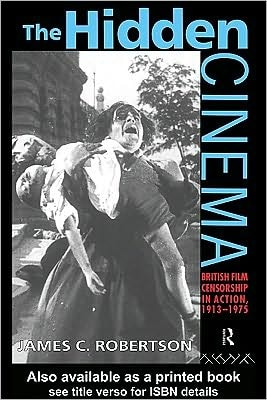
Hidden Cinema: British Film Censorship in Action 1913-1972
0
0
As an Amazon Associate and affiliate partner, Menrva Books earns from qualifying purchases. Learn more
Author Description
How does film censorship work in Britain? Jim Robertson's new paperback edition of The Hidden Cinema argues that censorship has had a far greater influence on British film history than is often apparent, creating the 'hidden cinema' of the title. Robertson charts the role of the British Board of Film Censors, established in 1913, and the histories of a variety of noteworthy films including Battleship Potemkin and No Orchids for Miss Blandish and revealing how censorship continues to exert a marked influence on many important films - like the controversial A Clockwork Orange - some of which have now vanished from British screens altogether. This edition includes a brand new section on Bernardo Bertolucci's Last Tango in Paris, immediately engulfed in censorship wrangles on its release in 1972.
Menrva's Summary
THE THESIS
This book investigates the historical influence and operational mechanics of film censorship within the British cinematic landscape from 1913 to 1972. James C. Robertson, a scholar of British film history, utilizes archival records from the British Board of Film Censors to demonstrate how regulatory bodies shaped the development of national cinema. By analyzing the suppression and modification of specific films, the author argues that censorship functioned as a primary, yet often overlooked, architect of British cultural output.
THE SCOPE MAP
What You Will Find
- Historical analysis of the British Board of Film Censors from its inception in 1913.
- Case studies of controversial films including Battleship Potemkin, No Orchids for Miss Blandish, and A Clockwork Orange.
- Examination of the regulatory conflicts surrounding the 1972 release of Last Tango in Paris.
- Documentation of films that were significantly altered or entirely removed from public circulation due to censorship mandates.
THE AUTHORITY PERSPECTIVE
Experts recognize this work as a foundational text for understanding the intersection of government regulation and artistic expression in the twentieth century. Readers frequently note the meticulous archival research that provides a clear view into the administrative processes of the British Board of Film Censors.
Page Count:
216
Publication Date:
2005-01-01
Publisher:
Taylor & Francis Group
ISBN-10:
0203990072
ISBN-13:
9780203990070
History
Non-Fiction
British History
Media Studies
Film Studies
Community Tags
Similar Books