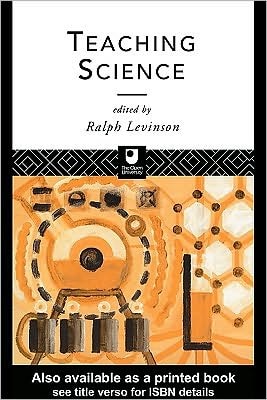
Teaching Science
0
0
As an Amazon Associate and affiliate partner, Menrva Books earns from qualifying purchases. Learn more
Author Description
Science education has undergone far-reaching changes in the last fifty years. The articles collected together in this reader examine how we have reached our present consensus and what theories we now use to explain how children learn science. The central sections of the reader examine how all this can be translated into effective and stimulating teaching, how learning can be most accurately and fairly assessed and how the impact of gender, ethnicity and other factors on children's performance can be addressed in methods of teaching which make science accessible to all. The articles in the final section of the book are a reminder that the debate is not finished yet and raise some challenging questions about what science education is and what it is for.
Menrva's Summary
THE THESIS
This collection investigates the evolution of science education and the pedagogical frameworks required to facilitate effective learning in diverse student populations. Ralph Levinson, an expert in science education, compiles a series of scholarly articles that trace the historical shift in consensus regarding how children acquire scientific knowledge. The text provides a comprehensive framework for educators to translate theoretical understanding into practical classroom strategies while addressing systemic barriers to student success.
THE SCOPE MAP
What You Will Find
- Historical analysis of science education trends over the past five decades
- Pedagogical theories regarding cognitive development in science learning
- Methodologies for fair and accurate assessment of student performance
- Strategies for addressing the impact of gender and ethnicity on educational outcomes
THE AUTHORITY PERSPECTIVE
Experts and educators frequently cite this reader as a foundational resource for understanding the complexities of modern science pedagogy. Readers often note the academic density of the prose, which serves as a rigorous guide for those involved in curriculum development and teacher training.
Page Count:
224
Publication Date:
2005-01-01
Publisher:
Taylor & Francis Group
ISBN-10:
0203990374
ISBN-13:
9780203990377
Science
Education
Academic
Teaching Methods
Science
Pedagogy
Community Tags
Other Editions(3)


Similar Books