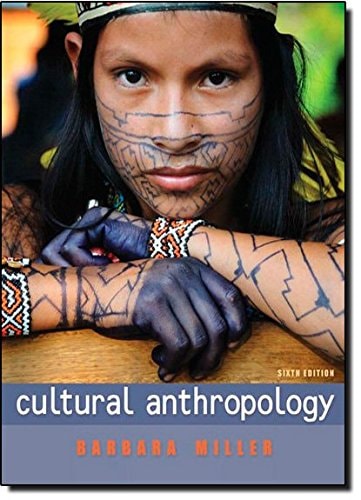
Cultural Anthropology
0
0
As an Amazon Associate and affiliate partner, Menrva Books earns from qualifying purchases. Learn more
Author Description
Successfully integrating attention to culture change, gender, class, race, ethnicity, and the environment, Barbara Miller's Cultural Anthropology engages students with compelling ethnographic examples, and demonstrates the relevance of anthropology in today's world. Faculty and students praise the book’s proven ability to generate class discussion, increase faculty-student engagement, and enhance student learning!Through clear writing, a balanced theoretical approach, and engaging examples, Barbara Miller stresses the importance of social inequality and human rights, the environment, culture change and applied aspects of anthropology. Rich examples of gender, ethnicity, race, class, and age thread through the topical coverage of economic systems, the life-cycle, health, kinship, social organization, politics, language, religion, and expressive culture. In addition, the last two chapters address how migration is changing world cultures, and how the importance of local cultural values and needs are shaping international development policies and programs.
Menrva's Summary
THE THESIS
This text investigates the core question of how anthropological theory and ethnographic research provide a framework for understanding the complexities of human social organization and cultural diversity in a globalized world. Barbara D. Miller, a seasoned academic in the field, utilizes a balanced theoretical approach to synthesize data on social inequality, human rights, and environmental challenges. The book serves as a comprehensive pedagogical tool, integrating contemporary ethnographic case studies to demonstrate the practical application of anthropological concepts to modern societal issues.
THE SCOPE MAP
What You Will Find
- Comprehensive coverage of economic systems, kinship, politics, religion, and expressive culture.
- Analysis of the intersectional impacts of gender, race, class, ethnicity, and age.
- Examination of global migration patterns and their influence on cultural transformation.
- Discussion of applied anthropology in the context of international development policies.
THE AUTHORITY PERSPECTIVE
The subject matter points to a dense, academic text designed for undergraduate-level instruction, emphasizing both theoretical foundations and real-world application. The framing suggests a structured, pedagogical approach that prioritizes student engagement through diverse ethnographic examples and critical analysis of social inequality.
Page Count:
456
Publication Date:
2010-11-22
Publisher:
Pearson
ISBN-10:
0205035183
ISBN-13:
9780205035182
textbook
Social Science
Anthropology
Community Tags
Other Editions(10)




Similar Books








Reader Comments
Share Your Thoughts
No comments yet. Be the first to share your thoughts!