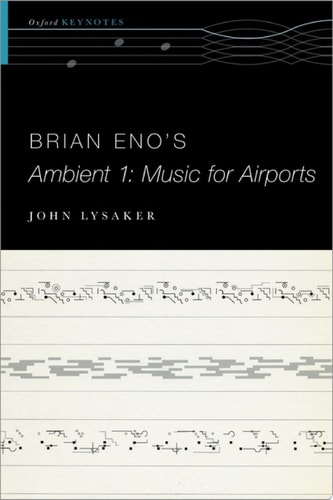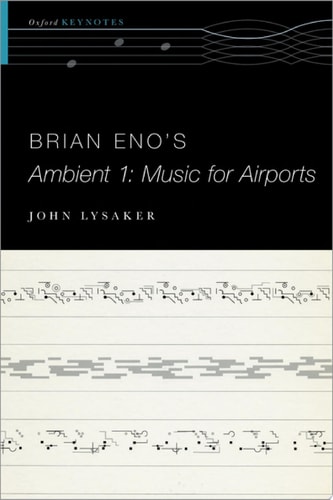
Brian Eno's Ambient 1: Music for Airports
0
0
As an Amazon Associate and affiliate partner, Menrva Books earns from qualifying purchases. Learn more
Author Description
Brian Eno's Seminal Album Ambient 1: Music For Airports Continues To Fascinate And Charm Audiences, Not Only As A Masterpiece Of Ambient Music, But As A Powerful And Transformative Work Of Art. Author John T. Lysaker Situates This Album In The Context Of Twentieth-century Art Music, Where Its Ambitions And Contributions To Avant Garde Music Practice Become Even More Apparent. To Appreciate The Album's Multifaceted Character, Lysaker Advocates For Prismatic Listening, An Attentiveness That Continually Shifts Registers In The Knowledge That No Single Approach Can Grasp The Work As A Whole. Exploring Each Of The Album's Four Tracks And Their Unique Sonic Arrangements, Brian Eno's Ambient 1: Music For Airports Argues That The Album Must Be Approached From At Least Three Angles: As An Ambient Contribution To Lived Environments That Draws Upon Cybernetics And The Experiments Of Erik Satie, As An Exploration Of What John Cage Has Termed The Activity Of Sounds, And As A Work Of Conceptual Art That Asks Us To Think Freshly About Artistic Creativity, Listening, And The Broad Ecology Of Interactions That Not Only Make Art Possible, But The Full Range Of Human Meaning. If One Listens In This Way, Music For Airports Becomes A Sonic Image That Blurs The Nature-culture Distinction And Rescues The Most Interesting Concerns Of Avant-garde Music From The Social Isolation Of Concert Halls And Performance Spaces.
Menrva's Summary
THE THESIS
How does Brian Eno's Ambient 1: Music for Airports function as both a sonic environment and a conceptual work of art within the history of twentieth-century music? John T. Lysaker, a professor of philosophy, utilizes a framework of 'prismatic listening' to analyze the album's composition and cultural significance. By situating the work alongside the experiments of Erik Satie and the theories of John Cage, Lysaker argues that the album transcends traditional performance spaces to influence the ecology of human interaction and meaning.
THE SCOPE MAP
What You Will Find
- Detailed analysis of the four individual tracks on the album
- Application of cybernetic theory to ambient soundscapes
- Philosophical examination of the nature-culture distinction in art
- Methodology for 'prismatic listening' as a tool for musical engagement
Scope Limits
- The text does not provide a comprehensive biography of Brian Eno
- It does not cover the technical production history or studio engineering details of the recording process
THE AUTHORITY PERSPECTIVE
Scholars and music critics recognize this work as a rigorous philosophical inquiry into the nature of ambient sound. Readers frequently note the academic density of the prose, which is best suited for those familiar with musicology and aesthetic theory.
Page Count:
128
Publication Date:
2018-01-01
Publisher:
Oxford University Press
ISBN-10:
0190497319
ISBN-13:
9780190497316
Music
Philosophy of
Avant-garde
Music theory
Art History