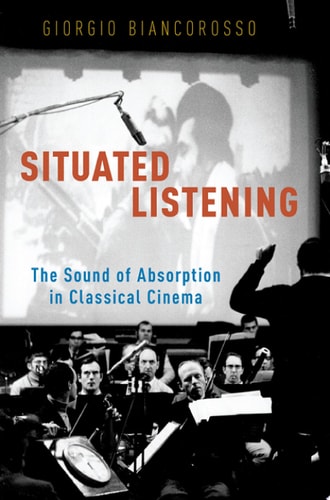
Situated Listening: The Sound of Absorption in Classical Cinema
0
0
As an Amazon Associate and affiliate partner, Menrva Books earns from qualifying purchases. Learn more
Author Description
Screenwriters and film directors have long been fascinated by the challenges of representing the listening experience on screen. While music has played a central role in film narrative since the conception of moving pictures, the representation of music listening has remained a special occurrence.In Situated Listening: The Sound of Absorption in Classical Cinema, author Giorgio Biancorosso argues for a redefinition of the music listener as represented in film. Rather than construct the listener as a reverential concertgoer, music analyst, or gallery dweller, this book instead shows how films offer a new way of thinking about listening as distributed experience, an activity made public and shareable across vast cultural spaces rather than an insular motion. It shows how cinema functions as not only a reservoir of established modes of listening, but also an agent in the development of new listening practices. As Biancorosso argues, many films have perpetuated a long-existing paradox of music as a means of silencing. Consider an aggressive score overlaying battle scenes or a romantic scene conveying unspoken intimacy. In the place of conversational exchange exists a veil of sound in the form of music, and Situated Listening explains why this function influences both the course of interpretation and empathy experienced by film spectators. By focusing on cinematic, physical, and emotional scenery surrounding a character, viewers can recognize aspects of their own lives, developing a deeper empathy for each fictional character through real and shared listening practices.
Menrva's Summary
THE THESIS
How does classical cinema redefine the act of listening by transforming it from an insular, private experience into a public, distributed practice? Giorgio Biancorosso, a scholar of film and music, utilizes a framework of cinematic analysis to examine how soundscapes in film influence audience interpretation and empathy. He argues that music in cinema often functions as a tool for silencing dialogue, thereby creating a unique emotional environment that shapes the spectator's engagement with the narrative.
THE SCOPE MAP
What You Will Find
- Analysis of music listening representations in classical film narratives
- Examination of the paradox of music as a silencing mechanism in visual media
- Theoretical framework for listening as a distributed, shareable cultural activity
- Case studies of cinematic scores overlaying battle and romantic sequences
Scope Limits
- Does not provide a comprehensive history of film scoring techniques
- Focuses primarily on classical cinema rather than contemporary digital media practices
THE AUTHORITY PERSPECTIVE
Scholars in the field of film musicology recognize this work as a significant contribution to the study of auditory perception in cinema. Readers frequently note the academic density of the prose, which provides a rigorous intellectual foundation for understanding the intersection of sound and visual storytelling.
Page Count:
260
Publication Date:
2016-01-01
Publisher:
Oxford University Press
ISBN-10:
0190493194
ISBN-13:
9780190493196
Humanities
Media Theory
Musicology
Professional Career & Trade
Film Studies
Graphic ArtsCommunicationsDesign
Cinema History
Film & Video
Criticism history
Community Tags
Similar Books