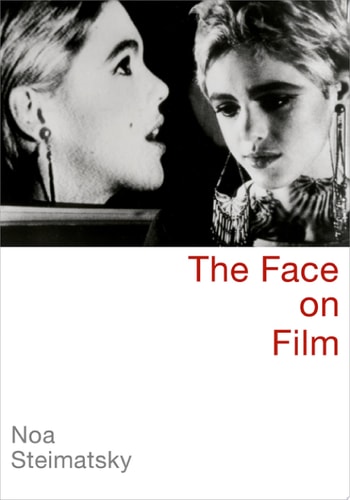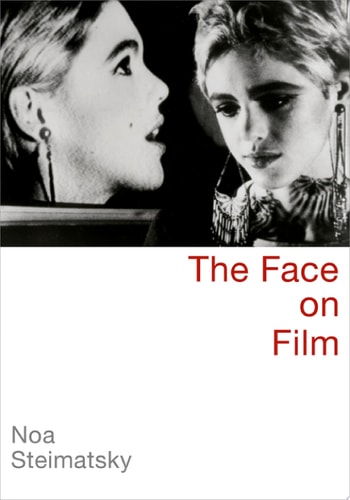
The Face on Film
0
0
As an Amazon Associate and affiliate partner, Menrva Books earns from qualifying purchases. Learn more
Author Description
The human face was said to be rediscovered with the advent of motion pictures, in which it is often viewed as expressive locus, as figure, and even as essence of the cinema. But how has the modern, technological, mass-circulating art revealed the face in ways that are also distinct from any other medium? How has it altered our perception of this quintessential incarnation of the person? The archaic powers of masks and icons, the fashioning of the individual in the humanist portrait, the modernist anxieties of fragmentation and de-figuration--these are among the cultural precedents informing our experience in the movie theatre. Yet the moving image also offers radical new confrontations with the face: Dreyer's Passion of Joan of Arc, Donen's Funny Face, Hitchcock's The Wrong Man, Bresson's enigmatic Au hasard Balthazar, Antonioni's Screen Test, Warhol's filmic portraits of celebrity and anonymity are among the key works explored in this book. In different ways these intense encounters manifest a desire for transparency and plenitude, but--especially in post-classical cinema--they also betray a profound ambiguity that haunts the human countenance as it wavers between image and language, between what we see and what we know. The spectacular impact of the cinematic face is uncannily bound up with an opacity, a reticence. But is it not for this very reason that, like faces in the world, it still enthralls us?
Menrva's Summary
THE THESIS
This book investigates how the cinematic medium uniquely reveals, alters, and complicates the human face as a site of meaning, identity, and technological representation. Noa Steimatsky, a scholar of film and visual culture, examines the intersection of historical portraiture, mask traditions, and modern filmic techniques. She argues that the cinematic face functions as a site of profound ambiguity, oscillating between the desire for transparency and the inherent opacity of the moving image.
THE SCOPE MAP
What You Will Find
- Analysis of the face as an expressive locus in film history
- Examination of cultural precedents including masks, icons, and humanist portraiture
- Case studies of works by directors such as Dreyer, Donen, Hitchcock, Bresson, Antonioni, and Warhol
- Exploration of the tension between image and language in post-classical cinema
Scope Limits
- The text does not provide a comprehensive history of all cinematic portraiture
- It focuses primarily on the theoretical and philosophical implications of the face rather than technical cinematography manuals
THE AUTHORITY PERSPECTIVE
Scholars and film theorists frequently cite this work as a sophisticated contribution to the study of cinematic aesthetics and the phenomenology of the face. Readers often note the academic density of the prose, which requires a foundational understanding of film theory and visual culture to fully engage with the author's arguments.
Page Count:
289
Publication Date:
2017-01-01
Publisher:
Oxford University Press
ISBN-10:
0190650354
ISBN-13:
9780190650353
Media Theory
Visual Culture
Film Studies
Art History
Cinema History