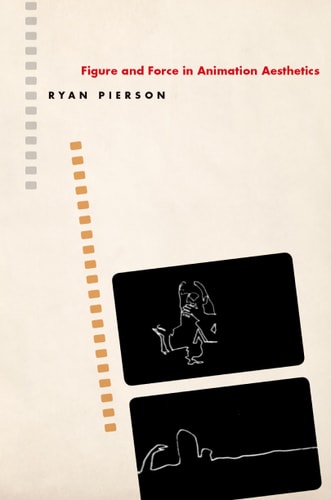
Figure and Force in Animation Aesthetics
0
0
As an Amazon Associate and affiliate partner, Menrva Books earns from qualifying purchases. Learn more
Author Description
How can we describe movements in animated films? In Figure and Force in Animation Aesthetics, Ryan Pierson introduces a powerful new method for the study of animation. By looking for figures--arrangements that seem to intuitively hold together--and forces--underlying units of attraction, repulsion, and direction--Pierson reveals startling new possibilities for animation criticism, history, and theory. Drawing on concepts from Gestalt psychology, Pierson offers a wide-ranging comparative study of four animation techniques--soft-edged forms, walk cycles, camera movement, and rotoscoping--as they appear in commercial, artisanal, and avant-garde works. In the process, through close readings of little-analyzed films, Pierson demonstrates that figures and forces make fertile resources for theoretical speculation, unearthing affinities between animation practice and such topics as the philosophy of mathematics, scientific and political revolution, and love. Beginning and ending with the imperative to look closely, Figure and Force in Animation Aesthetics is a performance in seeing the world of motion anew.
Menrva's Summary
THE THESIS
This work investigates how the interplay between visual figures and underlying forces defines the aesthetic experience and theoretical potential of animated motion. Ryan Pierson, a scholar in film and media studies, constructs a methodology rooted in Gestalt psychology to analyze how animation functions beyond simple narrative. By examining the structural components of movement, he argues that animation serves as a unique site for philosophical and political inquiry.
THE SCOPE MAP
What You Will Find
- Analysis of four specific animation techniques: soft-edged forms, walk cycles, camera movement, and rotoscoping.
- Application of Gestalt psychology to film theory.
- Comparative studies spanning commercial, artisanal, and avant-garde animation.
Scope Limits
- The text does not provide a comprehensive history of animation studios or industry business practices.
- It does not focus on voice acting or sound design elements in animation.
THE AUTHORITY PERSPECTIVE
Scholars and film theorists identify this text as a rigorous contribution to the formalist study of animation. Readers frequently note the academic density of the prose, which is intended for advanced students and researchers in media aesthetics.
Page Count:
214
Publication Date:
2019-01-01
Publisher:
Oxford University Press
ISBN-10:
0190949783
ISBN-13:
9780190949785
Animation
Media Theory
Professional Career & Trade
Film & Video
Humanities
Aesthetics
Animated films
Art History
Film Studies
Form Aesthetics
Graphic ArtsCommunicationsDesign
Motion pictures
Community Tags
Other Editions(3)
Similar Books