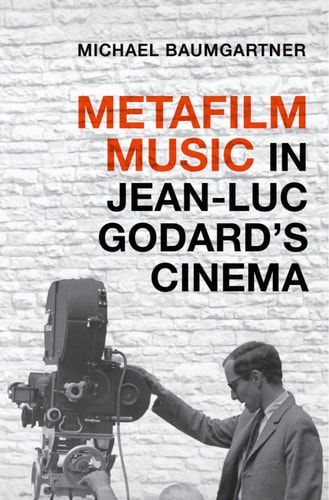
Metafilm Music in Jean-Luc Godard's Cinema
0
0
As an Amazon Associate and affiliate partner, Menrva Books earns from qualifying purchases. Learn more
Author Description
This monograph explores the under-researched use of music in Jean-Luc Godard's films and video essays from the early 1960s to the late 1990s. While Godard is largely hailed as a leading innovator of visual montage, unique storytelling style, and ground-breaking cinematography, his achievements as a leading pioneer in sculpting complex soundtracks altering the familiar relationship between sound and image have been mainly overlooked. On these soundtracks, music assumes the unique role of metafilm music. Metafilm music self-consciously refers to its own role as film music and disrupts the primary function of film music as an essential filmic device creating cinematic illusion. The concept of metafilm music describes how Godard thinks with film music about film music. Metafilm music manifests itself in Godard's work in four distinct manners: as fragmentized musical cues; as the same fragment verbatim repeated several times; as extrapolated, short excerpts from classical or popular music; and as music mixed unusually loudly into the soundtrack. With a detailed analysis of these parameters, the book explores fragmented and repeated music as Godard's critique of the leitmotif technique. Godard further self-reflexively investigates genre-specific music in musical comedies, films noir, and melodramas, as well as prototypical film music as arguably its own musical genre. His last foray into metafilm music entails music-making as a metaphor for filmmaking. By thinking with music about the function of film music, Godard has created throughout his career multi-layered soundtracks which challenge the conventional norms of film music and sound.
Menrva's Summary
THE THESIS
How does Jean-Luc Godard utilize music as a self-reflexive device to critique and redefine the traditional role of the film soundtrack? Michael Baumgartner, a scholar of music and film, examines Godard's career from the 1960s through the 1990s to argue that the director treats music as a form of critical inquiry. By analyzing specific sonic parameters, Baumgartner demonstrates how Godard disrupts cinematic illusion and challenges the conventional application of the leitmotif in film.
THE SCOPE MAP
What You Will Find
- Analysis of four distinct musical manifestations: fragmentized cues, verbatim repetition, extrapolated excerpts, and unconventional volume mixing.
- Examination of genre-specific music within musical comedies, films noir, and melodramas.
- Theoretical framework defining 'metafilm music' as a tool for thinking about the medium of film.
Scope Limits
- The study focuses primarily on Godard's output from the early 1960s to the late 1990s.
- The text does not provide a comprehensive biography of the director, focusing strictly on the intersection of sound and image.
THE AUTHORITY PERSPECTIVE
Scholars and film theorists recognize this work as a significant contribution to the study of sound in cinema, particularly regarding the French New Wave. Readers frequently note the academic density of the prose, which is intended for students and researchers of film musicology.
Page Count:
506
Publication Date:
2022-01-01
ISBN-10:
0190497181
ISBN-13:
9780190497187
Musicology
Film Studies
Film Theory
Sound design
Cinema History