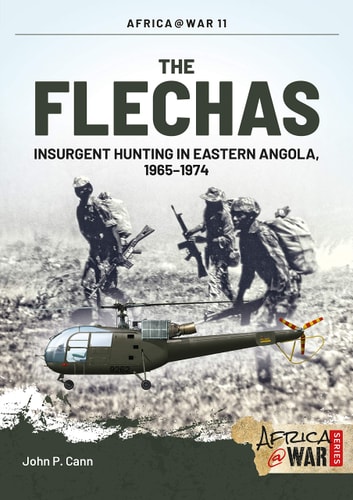
The Flechas: Insurgent Hunting in Eastern Angola, 1965-1974
0
0
As an Amazon Associate and affiliate partner, Menrva Books earns from qualifying purchases. Learn more
Author Description
In 1961, Portugal found itself fighting a war to retain its colonial possessions and preserve the remnants of its empire. It was almost completely unprepared to do so, and this was particularly evident in its ability to project power and to control the vast colonial spaces in Africa. Following the uprisings of March of 1961 in the north of Angola, Portugal poured troops into the colony as fast as its creaking logistic system would allow; however, these new arrivals were not competent and did not possess the skills needed to fight a counterinsurgency. While counterinsurgency by its nature requires substantial numbers of light infantry, the force must be trained in the craft of fighting a 'small war' to be effective. The majority of the arriving troops had no such indoctrination and had been readied at an accelerated pace. Even their uniforms were hastily crafted and not ideally suited to fighting in the bush. In reoccupying the north and addressing the enemy threat, Portugal quickly realized that its most effective forces were those with special qualifications and advanced training. Unfortunately, there were only very small numbers of such elite forces. The maturing experiences of Portuguese and their consequent adjustments to fight a counterinsurgency led to development of specialized, tailored units to close the gaps in skills and knowledge between the insurgents and their forces. The most remarkable such force was the flechas, indigenous Bushmen who lived in eastern Angola with the capacity to live and fight in its difficult terrain aptly named 'Lands at the End of the Earth'. Founded in 1966, they were active until the end of the war in 1974, and were so successful in their methods that the flecha template was copied in the other theaters of Guiné and Mozambique and later in the South African Border War. The flechas were a force unique to the conflicts of southern Africa. A flecha could smell the enemy and his weapons and read the bush in ways t
Menrva's Summary
THE THESIS
The book examines Portugal's unpreparedness and evolving strategies in its colonial wars, particularly focusing on the development and impact of the Flechas. The narrative details Portugal's struggle to maintain its empire following the 1961 uprisings, highlighting the logistical challenges and the inadequacy of its initial troop training for counterinsurgency warfare in vast African territories. It explores how the Portuguese military, recognizing the need for specialized forces, eventually developed elite units, with the Flechas of eastern Angola emerging as a particularly remarkable example due to their unique skills and effectiveness in difficult terrain.
THE SCOPE MAP
- The context of Portugal's colonial wars starting in 1961.
- Analysis of Portugal's initial unpreparedness for counterinsurgency.
- The development and operational history of the Flechas, an indigenous unit in eastern Angola.
- The unique skills and tactics employed by the Flechas in bush warfare.
- The influence of the Flechas model on other theaters and conflicts, including the South African Border War.
- The period of Flechas activity from 1966 to 1974.
THE AUTHORITY PERSPECTIVE
This work analyzes the specific military context of Portuguese colonial wars, focusing on the tactical innovations and specialized units that emerged from the conflict. The book's detailed examination of the Flechas suggests a focus on operational history and the adaptation of military forces to challenging environments. The subject matter points to a dense, specialist text for historians and military enthusiasts interested in the intricacies of counterinsurgency and African colonial conflicts.
Page Count:
64
Publication Date:
2013-01-01
Publisher:
Helion
ISBN-10:
1909384631
ISBN-13:
9781909384637
History
Non-Fiction
Military History
Africa
Community Tags
Similar Books