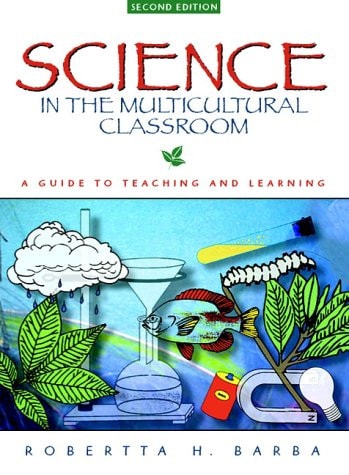
Science in the Multicultural Classroom: A Guide to Teaching and Learning
0
0
As an Amazon Associate and affiliate partner, Menrva Books earns from qualifying purchases. Learn more
Author Description
Not all wonderful ideas about teaching and learning will work in the science classroom. Budgets, space, and time constraints make it difficult to make science come alive for students. The author sought to keep teachers and students at the center of her writing. If she could not personally do something in her classroom, then she didn't advocate it for others. Likewise, if her colleagues found something cumbersome or impractical, she substituted a "working" idea. Organized into four parts, this book helps teachers address diversity in the classroom, construct a knowledge of science, develop pedagogical content knowledge, and teach with thematic units. Each chapter contains a wealth of practical activities. This revision includes the teaching standards from the National Science Education Standards, and information on technology. Educators who teach science to K-8 students.
Menrva's Summary
THE THESIS
This guide investigates how educators can effectively implement science instruction that respects classroom diversity while navigating the practical constraints of modern school environments. Drawing on her extensive experience as a classroom practitioner, Robertta H. Barba presents a framework centered on the realities of budgets, time, and space. The text emphasizes pedagogical content knowledge and thematic unit planning, ensuring that every suggested strategy is tested for feasibility and classroom utility.
THE SCOPE MAP
What You Will Find
- Strategies for addressing student diversity within the science curriculum
- Practical, field-tested activities for K-8 science instruction
- Integration of National Science Education Standards
- Methodologies for incorporating technology into thematic units
THE AUTHORITY PERSPECTIVE
The text is regarded as a pragmatic resource for K-8 educators, prioritizing actionable classroom techniques over abstract pedagogical theory. Its focus on field-tested methods suggests a high level of utility for teachers seeking to balance standard requirements with the diverse needs of their students.
Page Count:
450
Publication Date:
1997-07-25
Publisher:
Pearson
ISBN-10:
0205267378
ISBN-13:
9780205267378
Teaching Methods
Education
Pedagogy
Study & Teaching
Science Education
Community Tags
Other Editions(3)
Similar Books