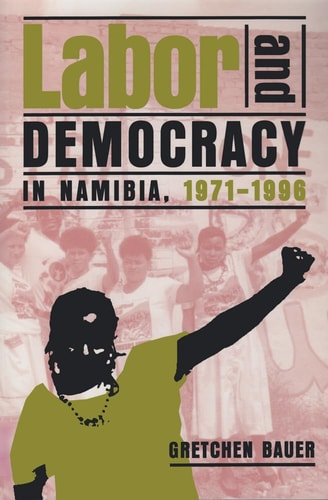
Labor and Democracy in Namibia, 19711996 (Theory)
0
0
As an Amazon Associate and affiliate partner, Menrva Books earns from qualifying purchases. Learn more
Author Description
In this compelling study of labor and nationalism during and after Namibia's struggle for liberation, Gretchen Bauer addresses the very difficult task of consolidating democracy in an independent Namibia. Labor and Democracy in Namibia, 1971-1996 argues that a vibrant and autonomous civil society is crucial to the consolidation of new democracies, and it identifies trade unions, in particular, as especially important organizations of civil society. In Namibia, however, trade unions have emerged from the liberation struggle and the first years of independence in a weakened state. Dr. Bauer gives a lucid explanation for this phenomenon by tracing the origins and evolution of the trade unions in Namibia and discusses the implications thereof for the future of democracy in Namibia. Based on material not widely available before independence in 1990, this study takes a critical look at the nationalist movement in Namibia. Through the use of dozens of interviews with political leaders, trade unionists, community activists, and others, Bauer offers the controversial suggestion that there are many within the nationalist movement (now the ruling party in government) who would rather not see a strong trade union movement (or any other potential rival) emerge in independent Namibia.
Menrva's Summary
THE THESIS
The consolidation of democracy in newly independent Namibia was critically dependent on the strength and autonomy of its civil society, particularly its trade unions. Gretchen Bauer's study examines the paradoxical weakening of Namibian trade unions in the post-liberation era, despite their crucial role in the struggle. The book traces the origins and evolution of these unions, analyzing how their emergence from the liberation movement and early independence period left them in a compromised state. Bauer critically assesses the nationalist movement, suggesting that elements within it may have actively sought to prevent the rise of strong, independent civil society organizations, including trade unions, which could challenge the ruling party's power.
THE SCOPE MAP
- Analysis of labor and nationalism during and after Namibia's liberation struggle.
- Examination of the challenges in consolidating democracy in an independent Namibia.
- Argument for the crucial role of a vibrant and autonomous civil society in new democracies.
- Identification of trade unions as particularly important organizations within civil society.
- Explanation for the weakened state of Namibian trade unions post-liberation.
- Tracing the origins and evolution of trade unions in Namibia.
- Critical look at the nationalist movement in Namibia.
- Exploration of the implications of trade union weakness for Namibia's future democracy, based on interviews with political leaders, trade unionists, and activists.
THE AUTHORITY PERSPECTIVE
Gretchen Bauer's study is recognized for its lucid explanation of the complex relationship between labor movements and democratic consolidation in post-colonial states. The research is noted for its critical examination of the nationalist movement, drawing on previously unavailable materials and extensive interviews to support its controversial suggestions. The book is considered a significant contribution to understanding the challenges faced by new democracies in establishing robust civil society institutions. Its analysis of the Namibian case provides valuable insights into the dynamics of power and the potential for internal resistance to democratic pluralism.
Page Count:
239
Publication Date:
1998-08-15
Publisher:
Ohio University Press
ISBN-10:
0821412167
ISBN-13:
9780821412169
Non-Fiction
History
Politics
Sociology
Community Tags
Similar Books