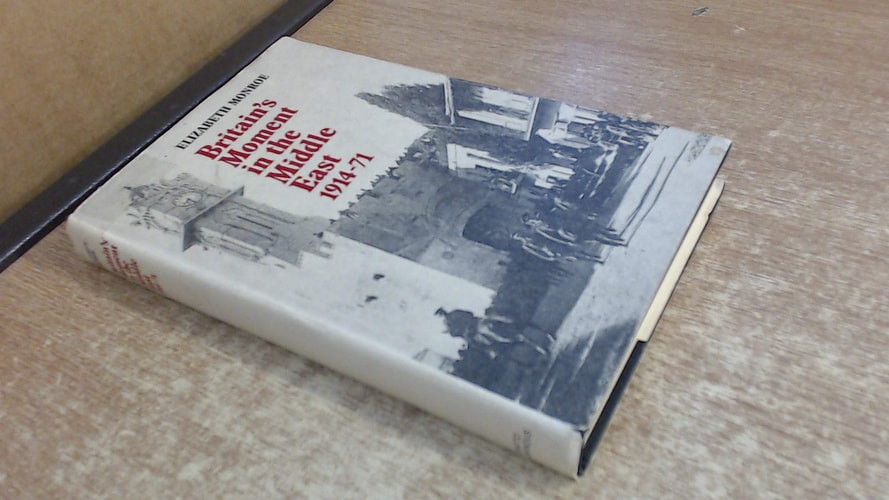
Britain's Moment in the Middle East 1914-1971
0
0
As an Amazon Associate and affiliate partner, Menrva Books earns from qualifying purchases. Learn more
Author Description
For forty years, from the capture of Baghdad and Jerusalem in 1917 to the debacle of Suez, Britain was the paramount power in the Middle East. Thereafter, and until 1971, she maintained a presence in the area, most significantly in the small but strategically important states of the Persian Gulf. In this book, first published in 1963 and now reissued in a new edition, Elizabeth Monroe traces the course of this episode, establishing how British supremacy came about, what purposes it served, and how and why this quasi-empire disappeared. In a new final chapter, tellingly entitled “Nightfall”, she assesses the disastrous Suez adventure in the light of the most recent evidence and deals with the disposal of Britain’s Middle Eastern hegemony on the coasts of Arabia. As Peter Mansfield points out in his new foreword, there are not many books of up-to-date history which stand the test of time, but this one does so triumphantly. Elizabeth Monroe observed the exercise of British authority in the Middle East from its early years and was personally acquainted with most of the leading actors. “Although she enjoyed an insider’s view of the British Establishment, she has never lost her ability to examine its activities with detachment. This, combined with an unusual energy for research, a piercing eye for inaccuracy or prejudice and a pithy, jargon-free prose-style, resulted in a book which is essential reading not only for students of the Middle East but for anyone interested in imperial history and the shifting balance of world power.”
Menrva's Summary
THE THESIS
This book investigates the rise and fall of British dominance in the Middle East from 1914 to 1971. Elizabeth Monroe, a historian with insider access and a detached perspective, traces the arc of British supremacy, examining its origins, its objectives, and its eventual dissolution. The narrative covers the period of paramount power following World War I, marked by the capture of key cities, through Britain's sustained, though diminished, presence in the strategically vital Persian Gulf states until 1971. The book critically assesses the Suez Crisis in light of new evidence and details the withdrawal from Arabia.
THE SCOPE MAP
- The establishment and maintenance of British paramountcy in the Middle East (1914-1971).
- Analysis of the strategic and political purposes served by British influence.
- An examination of the factors leading to the decline and disappearance of the British quasi-empire.
- A detailed assessment of the Suez Crisis and its implications.
- The process of Britain's withdrawal from its Middle Eastern territories, particularly in the Persian Gulf and Arabia.
- Insights into the leading actors and the exercise of British authority during this period.
THE AUTHORITY PERSPECTIVE
Peter Mansfield's foreword highlights this book's enduring relevance, noting that few contemporary history works withstand the test of time as triumphantly. Elizabeth Monroe's unique position, observing British authority firsthand and knowing many key figures, allowed her to write with both insider knowledge and critical detachment. Her research energy, sharp eye for inaccuracies, and clear prose style make it essential reading for students of the Middle East, imperial history, and global power dynamics. The book is recognized for its balanced analysis and comprehensive scope.
Page Count:
254
Publication Date:
1981-01-01
Publisher:
Chatto & Windus
ISBN-10:
0701125551
ISBN-13:
9780701125554
Non-Fiction
History
Middle East
British Empire
Community Tags
Similar Books