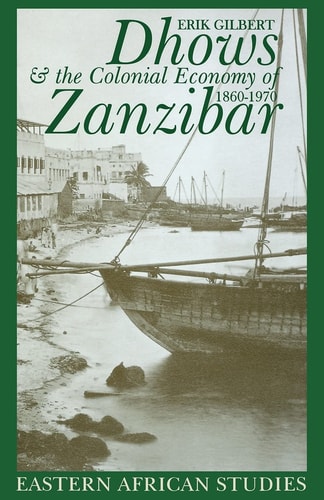
Dhows and the Colonial Economy of Zanzibar, 1860-1970
0
0
As an Amazon Associate and affiliate partner, Menrva Books earns from qualifying purchases. Learn more
Author Description
Conventional history assumes that the rise of the steamship trade killed off the Indian Ocean dhow trade in the twentieth century. Erik Gilbert argues that the dhow economy played a major role in shaping the economic and social life of colonial Zanzibar. Dhows, and the regional trade they fostered, allowed a class of indigenous entrepreneurs to thrive in Zanzibar. These entrepreneurs, whose economic interests stretched across continents and colonial boundaries, were able to thwart or shape many of the colonial state’s pet projects. Not only did steamships fail to drive out indigenous sailing craft, but in some cases dhows were able to drive the steamer out of specific market niches. In highlighting the role of East Africa’s commercial connections to the Middle East and India during the colonial period, Dhows and the Colonial Economy of Zanzibar, 1860-1970 makes a major contribution to African history as part of world history.
Menrva's Summary
THE THESIS
The dhow economy of Zanzibar significantly shaped its colonial economic and social landscape, challenging the assumption that steamships eradicated indigenous maritime trade. Erik Gilbert's work posits that dhows and the regional trade networks they facilitated empowered a class of indigenous entrepreneurs. These entrepreneurs, with interests spanning continents and colonial borders, actively influenced or obstructed colonial state initiatives. The book demonstrates that steamships did not eliminate sailing craft; in fact, dhows sometimes outcompeted steamers in specific markets, highlighting the persistent vitality of East Africa's commercial ties to the Middle East and India during the colonial era.
THE SCOPE MAP
- Analysis of the dhow trade's role in Zanzibar's economy from 1860 to 1970.
- Examination of how indigenous entrepreneurs utilized dhows to build transcontinental economic interests.
- Exploration of the dynamic between the dhow economy and the colonial state's projects.
- Evidence of dhows competing with and sometimes displacing steamship trade in certain market niches.
- Contribution to understanding East Africa's commercial connections to the Middle East and India during the colonial period.
THE AUTHORITY PERSPECTIVE
This book challenges conventional historical narratives by asserting the sustained importance of the dhow trade in colonial Zanzibar. It highlights the agency of indigenous entrepreneurs who navigated and influenced colonial economic policies. The work contributes to a broader understanding of African history within the context of global trade networks. The analysis suggests a complex interplay between traditional maritime economies and the encroaching modern shipping technologies.
Page Count:
288
Publication Date:
2005-02-15
Publisher:
Ohio University Press
ISBN-10:
0821415581
ISBN-13:
9780821415580
History
Non-Fiction
Colonialism
Maritime history
Zanzibar
Economic History
Africa
Community Tags
Similar Books